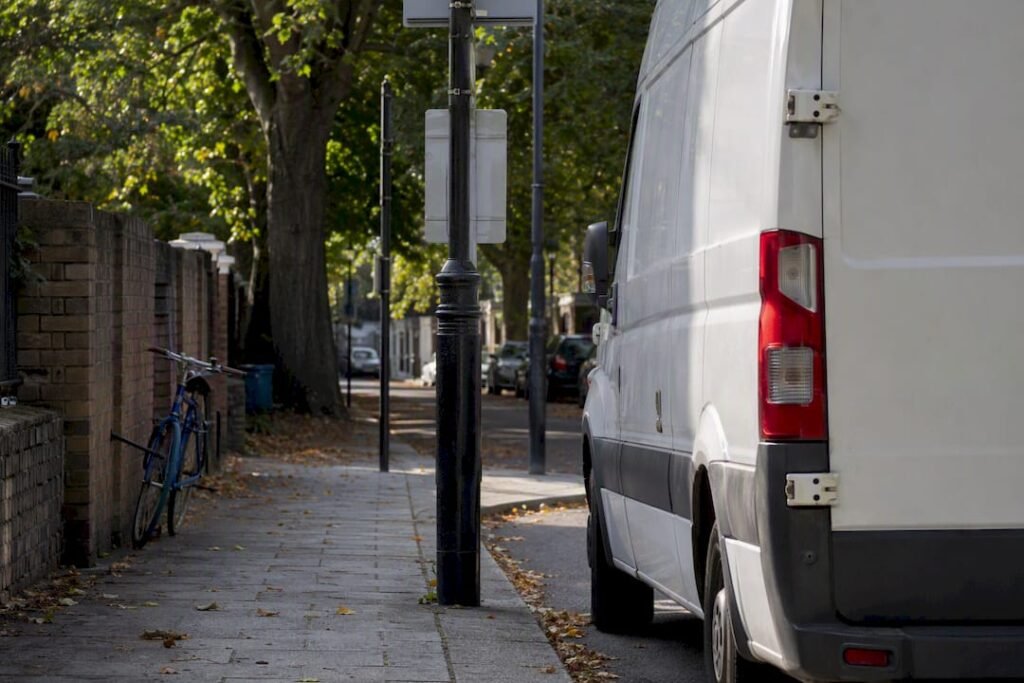
You need a parking suspension or a dispensation if your removal van has to stop somewhere restrictions or resident bays would normally prevent it. If your street allows short legal loading and unloading, you may not need formal permission at all. The two checks that decide everything: is the road managed by your borough or by TfL, and will legal loading actually cover the time you need?
- Check one: look at the road markings and signage to see who manages the street, borough or TfL.
- Check two: work out whether legal loading rules give you enough time, or whether you need a reserved bay.
Apply as early as you can once you know your move date. Boroughs get busier closer to weekends and month-ends, when most tenancies turn over.
Pro Tip: Stand on the pavement outside the property and photograph every sign post within 20 metres. The bay type, restriction hours and borough logo on those signs tell you almost everything you need before you even open a website.
Key Takeaways
Whether you need a moving van permit in London depends on whether the road is borough or TfL managed and whether legal loading covers your timeframe.
| Point | Details |
|---|---|
| Identify the road manager first | Check signage to see if your street is borough controlled or a TfL red route before applying anywhere. |
| Suspension vs dispensation | A suspension reserves a bay; a dispensation permits stopping where restrictions would otherwise apply. |
| Costs and notice vary widely | Fees typically run £30 to £150, with notice periods of roughly 5 to 17 working days. |
| Have your documents ready | Vehicle registration, dates, bay count, and sometimes a V5C or MOT are standard requirements. |
| Let a mover arrange it | Westlondonremoval can handle the entire application, payment, and on-day liaison for your move. |
Table of Contents
- What is a moving van permit in London, and how does it work?
- How to tell quickly whether your move needs formal permission
- How to apply for a moving van permit in London: step by step
- What does a London parking suspension cost, and how far ahead should you apply?
- What if you can’t get a suspension in time?
- How professional movers arrange parking, and when it’s worth paying for
- A practical timeline and checklist for moving-day parking
- If you don’t want to handle it: how West London Removal can arrange parking for your move
- Sources
What is a moving van permit in London, and how does it work?
A parking suspension reserves a specific bay or stretch of road for your van, blocking other vehicles from using it during your booked window. A dispensation works differently: it grants permission to stop somewhere restrictions would normally forbid it, such as on a stretch of double yellow lines, without physically reserving the space from other traffic.
The difference matters more than most people realise. A suspension is the right tool when you are removing a resident’s own bay from public use, for example converting a permit holder’s space outside a house into your loading zone for the day. A dispensation suits situations where there is no bay to reserve, such as a narrow street with continuous yellow lines where you simply need permission to stop briefly.
A suspension reserves a space; a dispensation allows stopping where restrictions would otherwise prevent it. They are not interchangeable, and applying for the wrong one causes delays on moving day.
- Suspension: use it for Controlled Parking Zones (CPZs) and resident bays.
- Dispensation: use it for yellow lines, loading bans, and short kerbside stops.
One thing catches people out every week: TfL red routes and other TfL-managed roads follow a completely separate process from borough suspensions. If your property fronts onto a red route, your local council cannot help you and applying to them wastes time you don’t have.
How to tell quickly whether your move needs formal permission
Walk outside and check these six things before you do anything else:
- Is the bay marked for residents only, or is it a Controlled Parking Zone (CPZ)?
- Are there single or double yellow lines along the kerb?
- Do loading restriction signs show specific banned hours?
- Is the road a red route or otherwise TfL-managed?
- How long will loading and unloading realistically take?
- How large is the van, and will it fit in a standard bay?
Run through this decision flow once you’ve gathered that information:
- If there are no restrictions and the street allows loading, legal loading is probably enough.
- If there’s a loading ban during certain hours but your move falls outside them, you may still be fine without a permit.
- If the street sits in a CPZ or has resident-only bays, you’ll need a suspension.
- If there are continuous yellow lines with no loading exemption, you’ll need a dispensation.
- If the road is TfL-managed, contact TfL directly rather than your borough.
Check the actual signage on the street rather than relying on a postcode lookup alone. Bay labels and hours printed on the pole are the ground truth, and they occasionally differ from what a borough’s online map suggests. Your council’s parking team is the first port of call for anything borough-managed, and GOV.UK’s parking permit guidance points you to the right local page for your area.
How to apply for a moving van permit in London: step by step
Step 1: Confirm who manages the road. This single check determines your entire application route, and getting it wrong means restarting the process with a different authority once you realise the mistake, sometimes with only days left before your move.
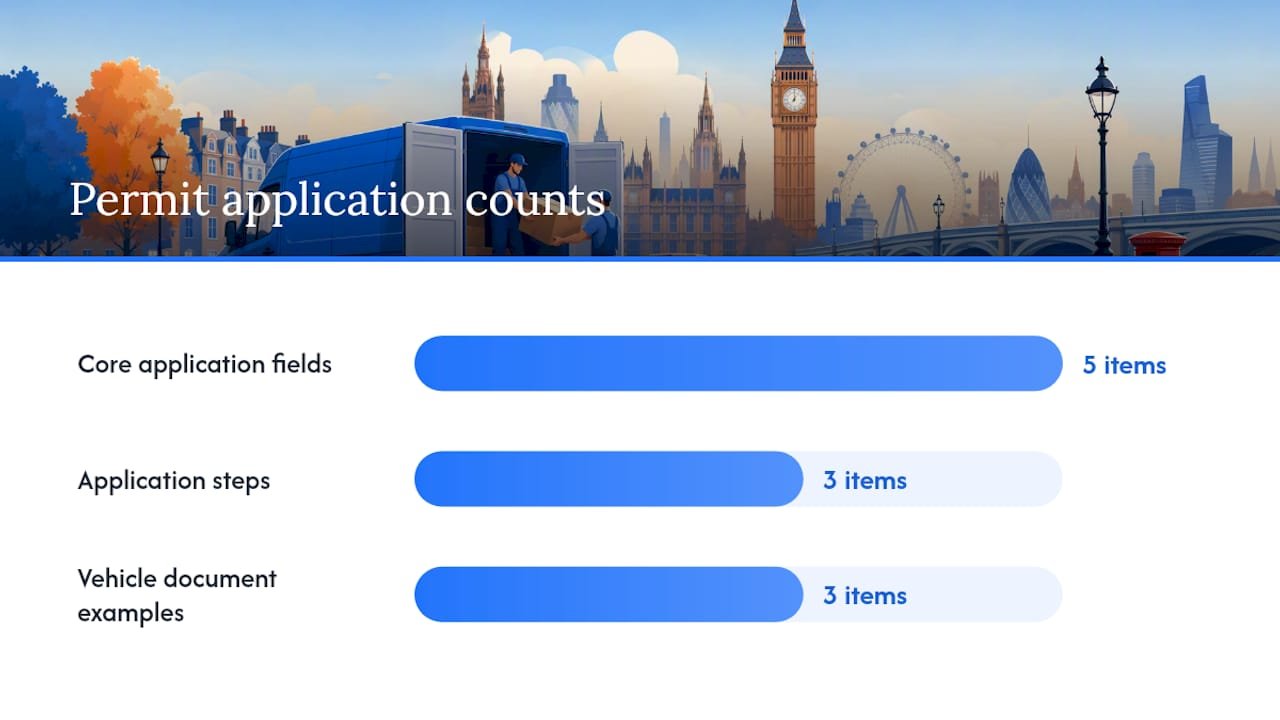
Step 2: Gather your application details. Nearly every borough portal asks for the same core fields:
- Vehicle registration number(s)
- Exact dates and times you need the suspension or dispensation
- Number of bays or length of road required
- Your contact details and the property address
- A payment card for the fee
Some boroughs, including Hackney, also ask for vehicle documents such as a V5C, MOT certificate or insurance, particularly where a permit carries dimension or weight limits.
Step 3: Submit through the correct channel. Most London councils now run online portals for suspensions and dispensations, though a handful still accept applications by email or post for edge cases. Upload any supporting documents at this stage rather than waiting to be asked.
Timing matters more than fee amount. Match your permission window precisely to your move, including buffer time either side for a van arriving early or a job overrunning. Applying for a window that’s too tight is one of the most common reasons moving days go wrong.
Once approved, check your confirmation carefully. It should include a reference number, exact start and end times, and either a bay identifier or a map showing precisely which stretch of road is covered.
Pro Tip: Print the confirmation and keep it visible on the dashboard during the move. Traffic wardens and enforcement officers won’t chase you down for proof, but having it to hand avoids an awkward conversation if a neighbour queries why “their” bay is suddenly cordoned off.
What does a London parking suspension cost, and how far ahead should you apply?
Fees and notice periods swing widely depending on which borough you’re dealing with. Typical costs across London fall between roughly £30 and £150, with central boroughs generally sitting at the higher end and outer boroughs cheaper. Most councils charge per bay per day plus a separate administration fee, and notice periods commonly run from five to seventeen working days depending on where you are.
- Short-notice applications are sometimes accepted but usually cost more and aren’t guaranteed.
- Weekend and month-end dates get booked up fastest, so apply as soon as you have a confirmed move date.
- Some boroughs offer emergency or expedited processing for an extra fee, though availability varies.
| Borough | Typical fee range | Typical notice period |
|---|---|---|
| Barnet | Lower to mid-range | Moderate notice period |
| Brent | Lower to mid-range | Moderate notice period |
| Camden | Mid to higher range | Longer notice period in busier zones |
| Hackney | Mid-range | Moderate notice period |
| Westminster | Higher range | Longer notice period for central CPZ areas |
Westminster’s own permits service also runs daily trade permits, which can suit a one-off move without going through the full suspension process. The City of London Corporation publishes its own estate-by-estate charges, worth checking if your move touches the Square Mile.
What if you can’t get a suspension in time?
A missed application window doesn’t have to mean a wasted moving day. A few lawful fallbacks exist, though each carries its own limits.
- Legal loading: stop briefly where loading is permitted, checking the exact hours on nearby signage before you commit.
- Nearby pay and display or loading bays: these can work for a short walk-and-carry job if a direct bay outside the property isn’t possible.
- Private driveways or commercial loading bays: ask neighbours or nearby businesses if a driveway or bay is available for a few hours.
- Off-peak moves: shifting your move earlier in the day can dodge the busiest restriction windows on some streets.
Stopping on double yellow lines or in a resident bay without permission risks a PCN, clamping, or an obstruction fine, on top of the disruption to your move if the van gets moved on mid-job.
If none of these stack up, your safest option is often to rebook with a removal firm that can pull together a dispensation at short notice, since established movers tend to know which boroughs process emergency requests fastest.
How professional movers arrange parking, and when it’s worth paying for

Established removal firms typically handle the entire permit process on a client’s behalf: submitting the application, paying the fee, and in some cases arranging cones or signage to mark the reserved bay before the van arrives.
This is worth paying for when:
- Your move is in a central London CPZ with tight notice periods.
- You’ve left the booking late and need a dispensation processed quickly.
- You’re moving a large van or lorry that needs multiple bays.
- You simply don’t have time to navigate a borough portal yourself.
Responsibility for any PCN issued on the day usually sits with the vehicle’s driver or the person named on the application, which is exactly why a properly arranged suspension matters. Without one, that risk sits entirely with you.
Pro Tip: Ask your removal firm to confirm the permit reference number in writing before moving day. If a warden queries the bay, you want that proof in your hand immediately, not buried in an email thread.
A practical timeline and checklist for moving-day parking
Work backwards from your move date using this rough schedule:
- 4+ weeks out: confirm your move date and identify the road manager for both properties.
- 2–3 weeks out: submit your suspension or dispensation application with all supporting documents.
- 7–10 working days out: chase confirmation if you haven’t heard back, and double-check the bay identifier matches the correct address.
- 48–72 hours out: print your confirmation, screenshot the payment receipt, and brief the removal team on the exact bay location.
Keep this checklist to hand as you go:
- Vehicle registration number(s) for every van involved
- Confirmed dates and times, with buffer either side
- Number of bays or length of road booked
- Payment receipt and application reference number
- Photos of relevant street signage, taken before you applied
Pro Tip: Save every screenshot, from the application form to the payment confirmation, in one folder on your phone. If a dispute arises on the day, having the full trail ready beats trying to reconstruct it under pressure.
Publisher perspective: common mistakes we see and simple fixes
We see the same errors on repeat: applications submitted too late, bay counts underestimated for larger vans, and TfL-managed roads mistaken for borough streets. Each has a straightforward fix. Apply the moment you have a date, over-order your bay space by one if the van is oversized, and check road ownership before you fill in a single form. Coordinate the permit timing with both your removal team and the building’s management wherever access is shared, since a permit that doesn’t match building access hours solves nothing.
If you don’t want to handle it: how West London Removal can arrange parking for your move
Chasing borough portals while you’re also packing boxes and coordinating keys is the last thing anyone needs. Westlondonremoval can take the parking permission off your plate entirely, applying for the correct suspension or dispensation, paying the fee, and confirming the bay reference before your move date arrives.

The service typically covers submitting the correct application to your borough or TfL, handling payment, arranging any on-street signage the council requires, and liaising directly with the parking team if anything needs adjusting on the day. That last part matters most for central London moves, where a mismatched bay booking can stall a whole crew for an hour. Westlondonremoval has handled this for well over 1,000 clients across West London, with insured, professional teams who know exactly which boroughs move fastest and which need a fortnight’s notice.
If you’d rather have this sorted for you, get in touch as soon as your move date is confirmed, ideally two to three weeks out for central boroughs. Book your house removal in West London and mention your parking situation when you enquire, so the permit application goes in alongside your booking rather than as an afterthought.
Sources
- Gov
- Parking Permits, Suspensions & Dispensations for Moving House in London
- Parking Permits Service
- Apply for a resident permit | Hackney Council
- Moving day permits — Parksy