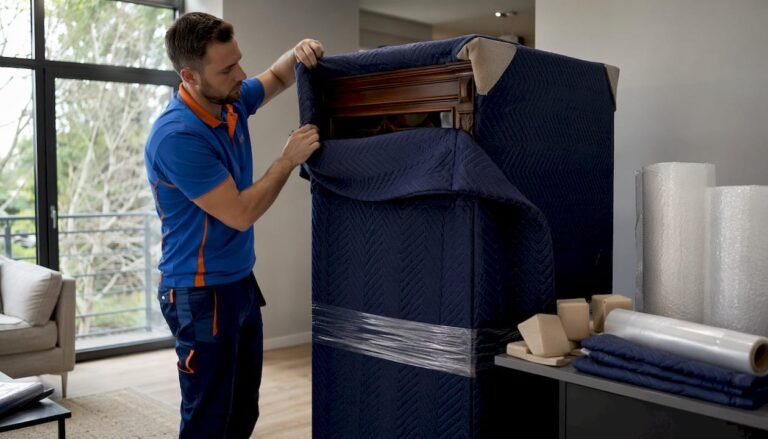
Specialist movers are defined as trained commercial relocation professionals who manage the full logistics of a business move, from IT infrastructure to modular furniture, to protect assets and maintain productivity. The difference between a general removal service and a commercial specialist is not just equipment. It is project management, compliance knowledge, and the ability to keep your business running throughout the process. For any business planning an office relocation in 2026, understanding why businesses need specialist movers is the difference between a smooth transition and days of lost revenue.
Why businesses need specialist movers: the core case
Business relocations are fundamentally different from residential moves. A standard removal team moves boxes and furniture. A specialist commercial mover manages multi-vendor coordination, phased scheduling, and compliance with building access protocols. That distinction matters enormously when your IT systems, server racks, and modular workstations are all involved.
The complexity grows quickly. A typical office move involves IT decommissioning, furniture disassembly, access coordination with building management, and precise reinstallation at the new site. General movers are trained for residential goods. They are not equipped to handle the sequencing that a commercial move demands.

Westlondonremoval works with business clients across West London who have experienced exactly this gap. Managers who assumed a standard van service would suffice often discovered the hard way that commercial moves require a different level of planning and execution.
What unique challenges do business relocations present?
Commercial moves carry risks that residential moves simply do not. The assets are more valuable, the timelines are tighter, and the consequences of errors are measured in lost revenue rather than inconvenience.
The most common challenges businesses face include:
- IT infrastructure complexity. Servers, networking hardware, and workstations require specific phased workflows that differ entirely from moving desks and chairs. Mishandling a server during transit can cause data loss or hardware failure.
- Modular furniture systems. Open-plan offices use interconnected furniture that must be disassembled, catalogued, and reassembled in the correct configuration. This is a skilled task, not a general labour job.
- Building access compliance. Failure to secure Certificates of Insurance, elevator bookings, and loading bay access weeks in advance causes denied entry and operational delays. Specialists understand these protocols and manage them proactively.
- Multi-vendor coordination. A commercial move often involves IT contractors, facilities teams, and removal crews working in parallel. Without a single point of coordination, gaps appear and timelines slip.
- Operational downtime risk. A poorly managed move can leave a business without functional IT or workspace for days. Specialist commercial movers prevent this by managing phased transitions that keep teams productive.
The misconception that all movers are the same is genuinely dangerous. Only specialists prevent catastrophic data loss or equipment failure during a commercial relocation.
Pro Tip: Ask any prospective mover whether they assign a dedicated project manager to your move. If they cannot confirm this, they are not equipped for a commercial relocation.
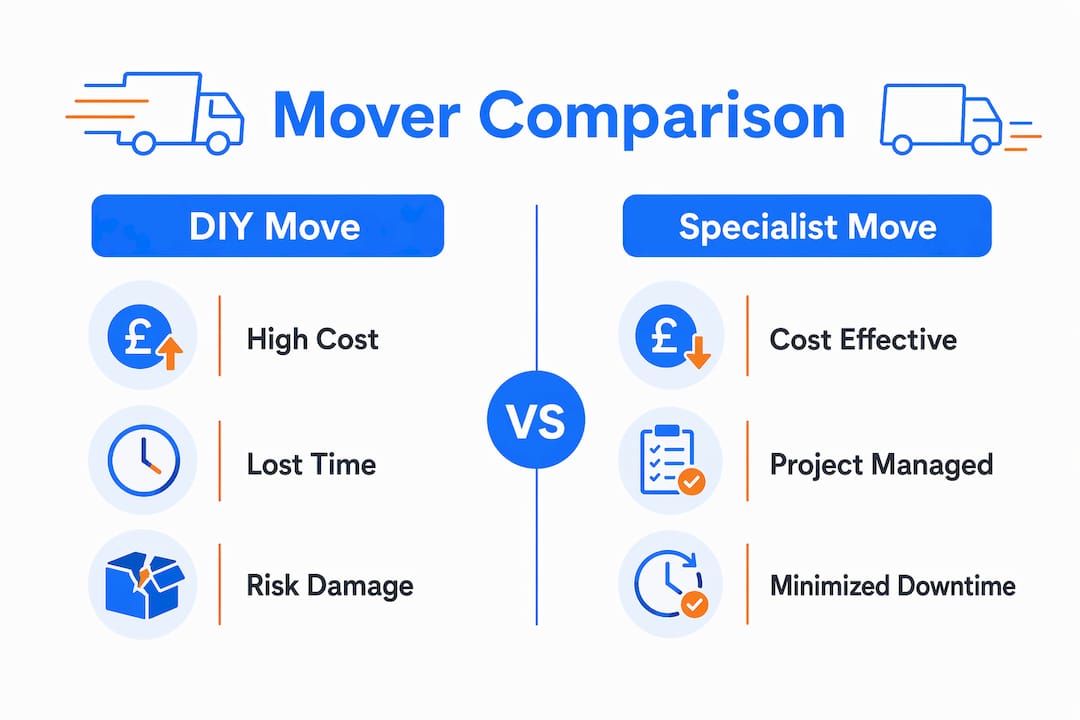
General removal services focus on physical transport. Commercial specialists focus on business continuity. That is the core distinction every business owner needs to understand before signing a contract.
How do specialist movers protect operations and reduce downtime?
Downtime is the single biggest financial risk in any office relocation. Specialist movers function as buffers preventing operational disruption by managing phased transitions that keep teams productive throughout the move. Business continuity is their core value, not just physical transport.
The practical steps that achieve this are:
- Early engagement and floor-plan analysis. Engaging specialist movers 3–6 months prior allows full floor-plan analysis, equipment rigging planning, and multi-vendor scheduling. This window is where most of the real work happens.
- Phased IT decommissioning and recommissioning. IT infrastructure requires its own workflow, separate from furniture. Specialists coordinate server shutdowns, safe transit, and recommissioning in the correct sequence to minimise post-move disruption.
- Coordinated scheduling across teams. A dedicated project manager acts as a single point of contact for crews, vendors, and building management. This eliminates the coordination gaps that cause delays.
- Overnight and weekend moves. Many specialist movers schedule the physical move outside business hours so staff arrive at a fully operational new office on Monday morning.
- Post-move support. Furniture placement, IT connectivity checks, and waste clearance are handled as part of the service, not left to your team.
Waiting until the last minute to hire specialist movers is one of the most common and costly mistakes businesses make. The earlier you engage, the more control you have over the timeline and the lower your risk of disruption.
Westlondonremoval’s office relocation services in West London are built around this principle. Planning starts well before moving day, and every stage is coordinated to protect your operations.
What are the safety, legal, and liability benefits?
Safety is a practical business concern, not just a moral one. 18–24% of DIY moves involve injuries requiring medical attention. That statistic applies directly to businesses that ask staff to help move heavy office equipment without professional support.
The liability implications are significant:
- Employee injury claims. If a staff member injures themselves moving office furniture, your business carries the liability. Professional movers carry their own public liability and employer’s liability insurance.
- Asset damage. High-value IT equipment, specialist machinery, and sensitive documents are covered under a professional mover’s insurance. DIY moves transfer that risk entirely to your business.
- Building compliance. Specialist movers manage Certificates of Insurance and building access requirements. Failure to comply can result in denied entry, fines, or damage to the building that your business must cover.
- Regulatory obligations. Health and safety regulations in the UK require employers to manage manual handling risks. Using professional movers is a direct way to meet that obligation.
Pro Tip: Before confirming any mover, request a copy of their public liability insurance certificate and confirm the coverage limit is appropriate for the value of your assets.
The importance of professional movers extends beyond the physical move. They transfer risk away from your business and onto a qualified, insured team. That protection has real financial value.
How does the cost of specialist movers compare with DIY?
The apparent cost saving of a DIY or general removal service disappears quickly when you account for hidden costs. DIY moves often incur 40–60 lost management hours and damage rates of 1–3%, making professional movers more cost-effective for most office relocations. Those hours represent real salary costs and lost productivity at a senior level.
The comparison becomes clearer when you break it down:
| Cost factor | DIY or general mover | Specialist mover |
|---|---|---|
| Management time | 40–60 hours lost | Handled by project manager |
| Equipment damage | 1–3% damage rate | Insured and professionally packed |
| IT downtime | Days of disruption possible | Phased plan minimises downtime |
| Building compliance | Risk of denied entry | Managed proactively |
| Transparent pricing | Hidden costs common | Bundled, fixed-price quotes |
Specialist movers offer transparent timelines and bundled services that eliminate the hidden costs of fuel, damage, and lost productivity. You know what you are paying before the move begins.
The true cost of a removal is not just the quote. It includes the value of your team’s time, the risk of equipment damage, and the cost of any downtime. When you factor all of that in, specialist movers consistently represent better value for medium-to-large office relocations.
For businesses weighing their options, the man and van versus full removal question is worth examining carefully. The right choice depends on the scale and complexity of your move.
Key takeaways
Specialist movers are the most cost-effective and operationally safe choice for business relocations because they manage logistics, compliance, and asset protection that general removal services cannot provide.
| Point | Details |
|---|---|
| Specialist movers prevent downtime | Phased transitions and project management keep teams productive throughout the move. |
| Early engagement is critical | Booking 3–6 months ahead allows full planning, IT scheduling, and vendor coordination. |
| DIY carries hidden costs | Lost management hours and 1–3% damage rates make DIY more expensive than it appears. |
| Safety and liability transfer | Professional movers carry insurance that protects your assets and your employees. |
| Building compliance is non-negotiable | Certificates of Insurance and elevator bookings must be secured weeks before moving day. |
What I have learned from watching businesses move
Most business owners treat a relocation as a logistics task. It is actually a project management challenge with logistics as one component. The managers who struggle most are those who focus entirely on the physical move and underestimate the coordination required across IT, facilities, and building management.
The businesses that move well share one habit: they engage specialist movers early and treat them as a project partner, not a delivery service. That relationship changes the quality of the outcome entirely. A good specialist mover will flag risks you have not considered, from building access restrictions to IT sequencing gaps, before they become problems.
I have seen businesses lose two or three days of productivity because their IT was recommissioned in the wrong order. That is a preventable outcome. It happens when the mover does not understand IT workflows and the business does not know to ask.
The other pattern I notice is that businesses consistently underestimate the value of a single point of contact. When your project manager, IT contractor, and removal crew are all reporting to different people, things fall through the gaps. A specialist mover with a dedicated project manager eliminates that problem.
If you are planning an office move, the most valuable thing you can do right now is start the conversation with a specialist. Not to book anything, but to understand the scope of what is involved. That conversation will change how you plan the entire project.
— London
Westlondonremoval: specialist business moves in West London
Planning an office relocation in West London? Westlondonremoval provides fully managed commercial moving services built around the needs of business clients. We handle project management, IT equipment handling, furniture disassembly, and building compliance so you do not have to.
Our team works around your schedule, including evenings and weekends, to minimise disruption to your operations. Transparent pricing means no surprises on moving day. Whether you are relocating a small office or a multi-floor workspace, we bring the planning and care your business assets deserve. Visit Westlondonremoval to request a quote or speak with our team about your move.
FAQ
Why do businesses need specialist movers rather than general removal services?
Specialist movers manage IT infrastructure, building compliance, and phased scheduling that general removal services are not equipped to handle. The difference directly affects how quickly your business is operational after the move.
How far in advance should a business book specialist movers?
Booking 3–6 months before your move date gives specialist movers enough time to plan IT workflows, coordinate vendors, and secure building access requirements. Last-minute bookings significantly increase the risk of disruption.
Does hiring specialist movers actually reduce costs for businesses?
DIY office moves typically incur 40–60 lost management hours and equipment damage rates of 1–3%. Specialist movers offer bundled, transparent pricing that eliminates these hidden costs and protects high-value assets.
What insurance should specialist movers carry for a business relocation?
Specialist movers should carry public liability insurance and goods-in-transit cover appropriate for the value of your assets. Always request a copy of their insurance certificate before confirming the booking.
What is the biggest risk of not using specialist movers for an office move?
The biggest risk is extended IT downtime. Without a phased IT decommissioning and recommissioning plan, businesses can lose several days of productivity after moving day.