
Flatpack furniture delivery is a tiered service that ranges from a basic doorstep drop-off to full white-glove assembly inside your home. Understanding how flatpack furniture delivery works before you order saves you from unexpected costs, scheduling headaches, and the frustration of a sofa stuck in your hallway. The flatpack delivery process involves three distinct service levels, each with different price points and responsibilities for you as the buyer. Knowing which tier suits your situation is the single most important decision you will make before clicking “buy.”
What are the typical delivery and assembly service options?
Standard flatpack furniture delivery splits into three clear tiers, and each one places a different burden on you.
Threshold delivery is the most basic option. The courier brings your items to your front door or building entrance and leaves them there. You carry everything inside yourself. This is the cheapest tier and suits ground-floor flats or buyers who are confident handling large boxes alone.
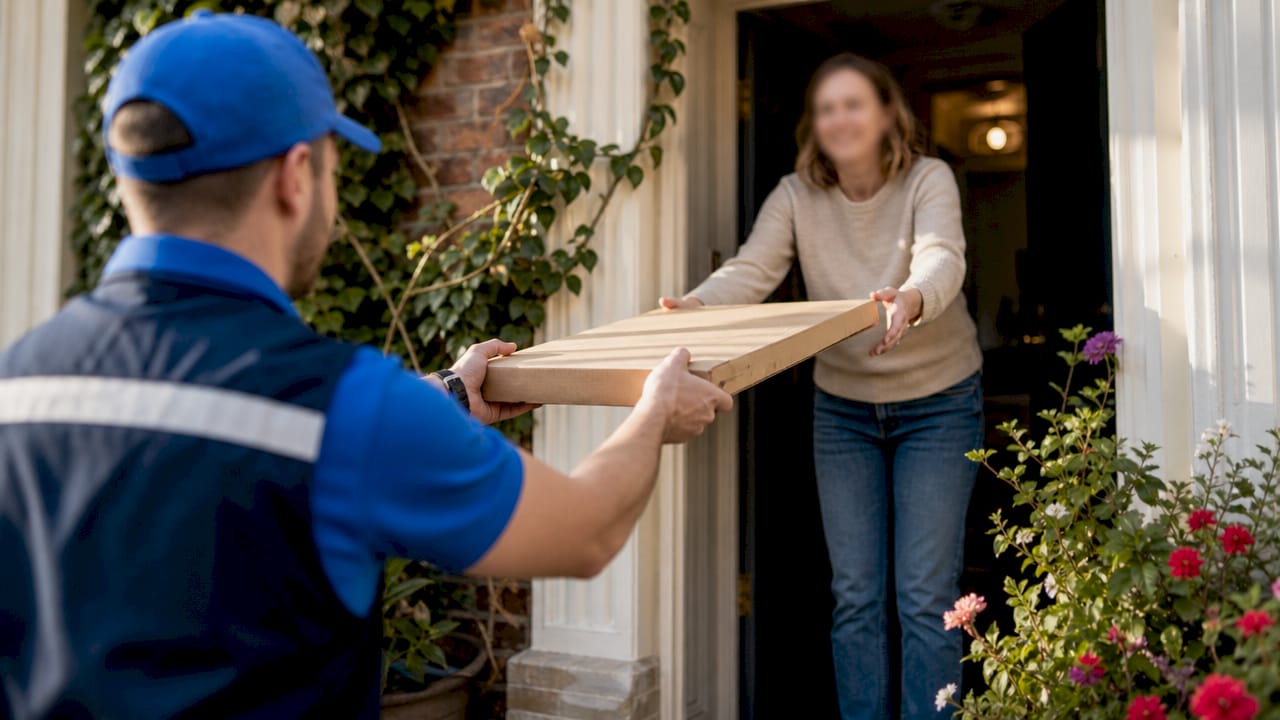
Room-of-choice delivery costs more, but the team carries your items to the specific room you designate. They do not unpack or assemble anything. This tier is worth paying for if you live in a multi-storey property or are ordering a large wardrobe that you cannot safely move alone.
White-glove assembly service is the premium option. The team delivers, unpacks, assembles, positions the furniture, and removes all packaging waste. Professional assembly costs range from £50–£100 for simple units like bookcases to £150–£400 for large or complex items. That price reflects skilled labour, tools, and the removal of cardboard and polystyrene from your home.
Key differences between the three tiers:
- Threshold delivery: lowest cost, no carrying inside, no assembly
- Room-of-choice delivery: mid-range cost, carried to your room, no assembly
- White-glove service: highest cost, full assembly, packaging removed
Pro Tip: If you live above the ground floor without a lift, always book room-of-choice delivery as a minimum. Carrying a flat-packed double bed frame up two flights of stairs alone is a genuine injury risk.
How long does flatpack furniture delivery and assembly take?
Timing is where most buyers get caught out. The flatpack furniture shipping process has two separate phases: the time from order to despatch, and the time from despatch to your door.
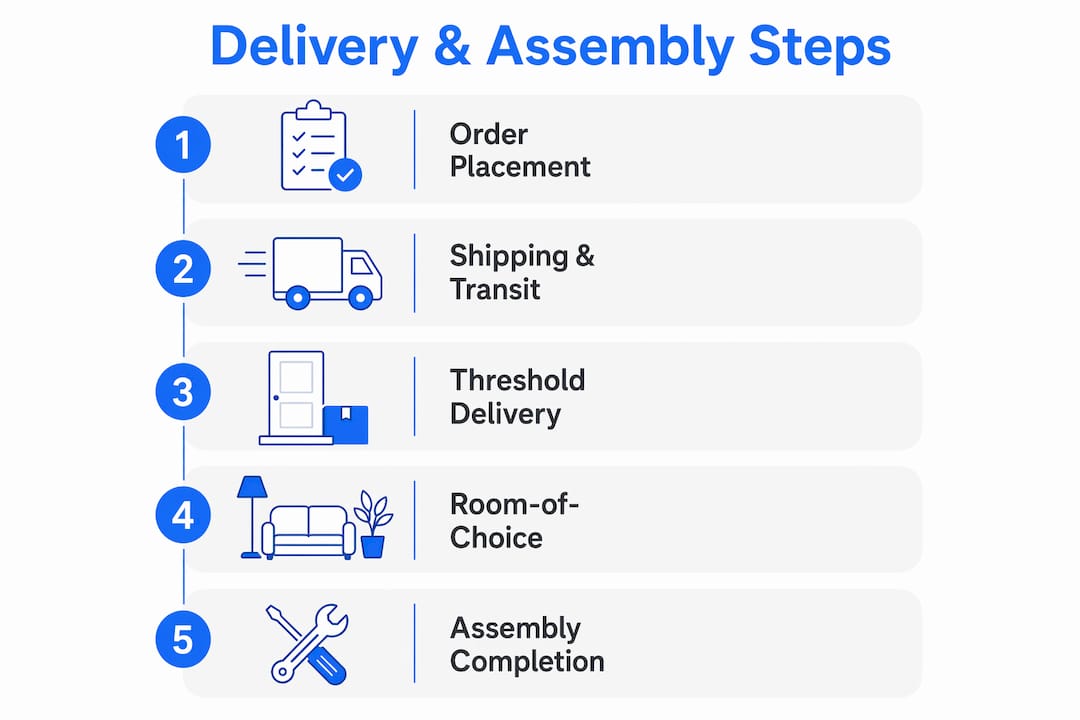
In-stock items generally ship within 3–7 business days, and post-shipment delivery adds a further one to three weeks depending on the carrier and service level. That means you could be waiting up to four weeks from order to delivery for standard items. Retailers selling made-to-order or upholstered flatpack pieces often quote six to twelve weeks, so always check the product page carefully before assuming a quick turnaround.
Once the furniture arrives, assembly time depends entirely on the complexity of the piece:
- Simple units (bookcases, bedside tables, small shelving): 30–60 minutes for a professional assembler
- Mid-range items (dining tables, bed frames, chest of drawers): 60–90 minutes
- Complex pieces (large wardrobes, modular storage systems, bunk beds): 2–3 hours or more, with full room fitouts potentially taking half a day
Scheduling matters as much as timing. Most carriers offer half-day or full-day delivery windows, which means you need to be available for a significant block of time. Confirm your window as soon as you receive the booking notification, and check whether the carrier sends a live tracking link on the day. If you live in a flat with restricted parking or a managed building, notify the delivery team in advance so they can plan access.
Pro Tip: Book your assembly appointment for the day after delivery if you are doing it yourself. Rushing assembly the same evening leads to mistakes that are harder to fix once the unit is in position.
What preparation should you do before and during delivery?
Preparation before the delivery team arrives is the difference between a smooth handover and a stressful one. Measure every access point before your delivery date.
Check the width of your front door, hallway, stairwell, and the room doorway. Compare these measurements against the longest dimension of the flatpack boxes, not the assembled furniture. Flatpack boxes are often longer than the finished item, and a box that cannot turn a corner will not reach your room. Clear the pathway completely, removing shoes, coats, and any furniture that narrows the route.
If you live in a managed building or a block of flats, contact the building manager before your delivery. Some buildings require advance notice for lift use or have restricted delivery hours. Failing to arrange this can result in the delivery team being turned away, which often incurs a redelivery charge.
During delivery, inspect every piece before the team leaves. Inspecting all pieces with the delivery team before assembly reduces disputes and speeds up resolutions if replacements are needed. Common transit damage includes scratches, dents, torn upholstery, and cracked panels. Use this checklist:
- Open every box and check each panel or component
- Compare the contents against the packing list included in the box
- Photograph any damage immediately on your phone with a timestamp
- Note missing parts on the delivery paperwork before signing
- Contact the retailer the same day with photographic evidence
Pro Tip: Never sign the delivery note as “received in good condition” if you have not fully inspected the contents. Write “unchecked” or “subject to inspection” on the paperwork instead. This protects your right to claim for damage discovered after the team has left.
| Preparation step | Why it matters |
|---|---|
| Measure access points | Prevents boxes being stuck in hallways or stairwells |
| Clear pathways | Reduces injury risk and speeds up delivery |
| Notify building management | Avoids refused entry or redelivery charges |
| Inspect all components | Enables same-day damage claims with the retailer |
| Photograph damage immediately | Provides timestamped evidence for dispute resolution |
What are the best practices for assembling flatpack furniture?
Reading the entire instruction manual before you pick up a single component is the most effective thing you can do to reduce errors. Most buyers skip this step and discover a tricky sequence or a step requiring two people only after they are halfway through the build. Read the full manual first, identify the stages that need a second pair of hands, and recruit help before you start.
Follow this sequence for reliable results:
- Sort and lay out all components on a clean, flat surface. Group screws, cam locks, dowels, and fixings into separate piles or containers.
- Do a dry run by laying out the main panels in the order they will be assembled. A dry run prevents common errors like upside-down shelves or backwards panels, and can save around 15 minutes per hour of assembly time.
- Assemble on a soft surface such as a folded blanket or carpet offcut. This protects finished surfaces from scratches during the build.
- Fit the back panel last, but nail it precisely. The back panel provides up to 90% of lateral stability in most flatpack units. Nails should be spaced approximately 15cm apart. Skipping or rushing this step causes doors to hang unevenly and units to sway.
- Check squareness before tightening fully. Measure the diagonals of the assembled frame. If both diagonals match, the frame is square. If they differ, gently rack the frame until they equalise, then tighten all fixings.
- Secure tall units to the wall using the anti-tip bracket included in most flatpack wardrobes and bookcases. This is a safety requirement, not an optional extra.
Pro Tip: Tape the included Allen key to an inconspicuous spot on the back of the furniture once assembly is complete. Joints loosen naturally over time, and having the correct key immediately to hand makes re-tightening a two-minute job rather than a search through three drawers.
Key takeaways
Flatpack furniture delivery works best when you choose the right service tier, prepare your space thoroughly, and follow a structured assembly sequence from the start.
| Point | Details |
|---|---|
| Choose the correct delivery tier | Match threshold, room-of-choice, or white-glove service to your property and ability. |
| Budget realistically for assembly | Professional assembly costs £50–£400 depending on item complexity and size. |
| Allow up to four weeks for delivery | In-stock items ship in 3–7 days, but total delivery can take one to three weeks more. |
| Inspect before signing | Photograph all damage and note it on the delivery paperwork before the team leaves. |
| Read the manual first | Identifying two-person steps and tricky sequences before starting prevents costly errors. |
Our experience with flatpack delivery and assembly
We have handled hundreds of furniture deliveries across West London, and the pattern is consistent. The customers who have the smoothest experience are not the ones who are most technically skilled. They are the ones who prepared their space properly, chose the right service tier for their building, and inspected their delivery carefully.
The most common problem we see is buyers choosing threshold delivery for a first-floor flat to save money, then realising they cannot safely carry a 60kg wardrobe box up a narrow staircase. The redelivery or upgrade cost always exceeds what they saved. White-glove service is genuinely worth the price for large, heavy, or complex pieces, particularly in older West London properties with tight stairwells and no lift.
Assembly quality has also improved noticeably as flatpack designs have become more precise. The back panel and squareness checks that once felt like optional finishing touches are now structurally critical on modern units. Skipping them produces furniture that looks fine on day one but develops wobble and misaligned doors within weeks. We always recommend a professional assembler for anything larger than a single wardrobe, not because the task is beyond most people, but because the time and frustration saved is worth every penny.
— West London removals
Westlondonremoval can help with your furniture delivery
Planning a furniture delivery alongside a house move adds another layer of coordination. Westlondonremoval handles both, with transparent pricing and same-day availability across West London.

Whether you need a reliable team to carry heavy flatpack boxes to your room of choice or full house removal support that includes furniture positioning, Westlondonremoval has you covered. With over 1,000 satisfied clients and consistently high ratings for reliability, the team takes the physical effort off your hands so you can focus on settling in. Get in touch today for a clear, no-obligation quote, or book Chiswick removals directly online.
FAQ
What is flatpack furniture delivery?
Flatpack furniture delivery is the shipping of disassembled furniture in flat boxes directly to a customer’s address. Service levels range from doorstep drop-off to full white-glove assembly inside the home.
How long does flatpack furniture delivery take?
In-stock items ship within 3–7 business days, with post-shipment delivery adding one to three weeks. Total wait time from order to delivery is typically two to four weeks.
Is flatpack delivery easy to manage yourself?
Threshold and room-of-choice deliveries are straightforward if you have clear access and help available. White-glove service is the better choice for upper-floor properties, heavy items, or complex assemblies.
How much does professional flatpack assembly cost?
Professional assembly costs range from £50–£100 for simple units to £150–£400 for large or complex items, and typically includes unpacking and removal of packaging materials.
What should I check when my flatpack furniture arrives?
Open every box, compare contents against the packing list, photograph any damage immediately, and note missing or damaged parts on the delivery paperwork before signing. Inspecting with the delivery team present speeds up any replacement claims significantly.