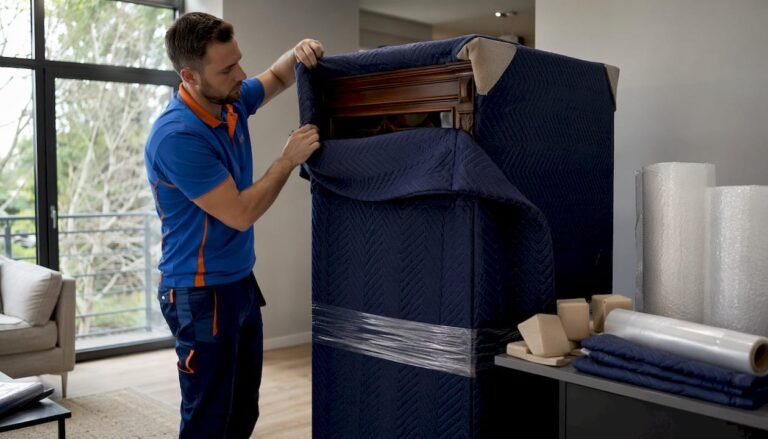
Furniture disposal options when moving house fall into four clear categories: selling, donating, recycling, and professional removal. Choosing the right method before you pack saves money, reduces landfill waste, and means you arrive at your new home without dragging items you no longer need. The disposal hierarchy for movers prioritises selling and donating first, then professional junk removal for anything left over. Getting this right early is one of the most overlooked ways to cut your total moving costs.
1. What are the main furniture disposal options when moving house?
The four core methods cover almost every situation you will face when clearing a property before a move.
- Sell online or locally. Selling via Facebook Marketplace or Gumtree is the top choice for furniture in good condition. It puts money back in your pocket and keeps items out of landfill. The trade-off is time: you need to photograph items, respond to buyers, and arrange collection.
- Donate to a charity or local organisation. Donating to charities such as the British Heart Foundation or Habitat for Humanity ReStores is the preferred eco-friendly route for usable pieces. Many charities offer free collection, which removes the logistics burden from you entirely.
- Hire a professional removal or clearance service. Professional services handle collection, sorting, and disposal in a single visit. They typically split items into donation, recycling, and disposal streams on your behalf, which saves considerable effort.
- Recycle or responsibly dispose of unusable items. Local council bulky waste collections and household waste recycling centres accept most furniture. This route is low cost but requires planning around collection schedules.
Pro Tip: List items for sale at least four weeks before your move date. Buyers often need time to arrange collection, and a last-minute listing rarely attracts serious offers.
Each method suits a different situation. Condition, timing, and budget all influence which one works best for you.
2. How to decide which disposal method suits your needs
Choosing the right method starts with an honest assessment of each item’s condition.
- Check the condition first. Furniture that is clean, structurally sound, and free from significant damage is saleable or donation-worthy. Anything stained, broken, or heavily worn goes straight to recycling or professional disposal.
- Factor in your timeline. Selling takes the most time. If your move is less than two weeks away, donation or professional removal is more realistic than waiting for a buyer.
- Understand the costs involved. Selling is free to list but costs time. Donation pickups are usually free. Professional removal services charge based on volume and provide upfront quotes, so you know the cost before committing.
- Check building and property restrictions. Landlords and property managers often have rules about leaving items in communal areas. Leaving furniture in corridors or skips without permission can result in fines.
- Consider the environmental impact. The waste disposal hierarchy used by UK local authorities places reuse above recycling and recycling above landfill. Selling and donating sit at the top of that hierarchy. Landfill is always the last resort.
Moving experts recommend assessing furniture before you start packing. Transporting unwanted furniture inflates your moving costs unnecessarily and clutters your new home from day one.
3. Preparing furniture for sale
Selling furniture takes preparation, but the return is worth the effort for items in good condition.
Clean each piece thoroughly before photographing it. Buyers judge heavily on first impressions, and a dusty sofa photograph will attract low offers or none at all. Take photos in natural daylight from multiple angles, including any minor scuffs or wear, so buyers know exactly what they are getting. Honest listings attract serious buyers and reduce time-wasting.

Set a realistic price by checking what similar items sell for on Facebook Marketplace or Gumtree. Price slightly above your minimum to leave room for negotiation. Specify that the buyer must arrange collection to avoid the hassle of delivery.
Pro Tip: Bundle smaller items together, such as a bedside table with a lamp, to make listings more attractive and clear your property faster.
4. Coordinating a furniture donation
Donation is the most eco-friendly disposal method for usable furniture, but it requires coordination. Donation centres have strict acceptance policies, so always verify condition requirements and pickup availability before scheduling a collection. Turning up at a charity shop with a sofa they cannot accept wastes everyone’s time.
Contact the charity at least one to two weeks before your move date. British Heart Foundation Furniture and Electrical stores, for example, offer free home collections but book up quickly. Confirm whether the item needs to be disassembled, bagged, or moved to a ground-floor location before the collection team arrives.
If a charity cannot accept your items, professional removal services often sort donations, recycling, and disposal in a single visit. This is the most practical fallback when time is short.
5. Booking a professional removal or clearance service
Professional furniture removal is the most convenient option when you have multiple large items, a tight deadline, or items that no charity will accept.
- Book early for same-day or next-day availability. Same-day or next-day appointments are widely available in metropolitan areas when booked before noon. Most residential clearouts complete within a single appointment.
- Get an upfront, volume-based quote. Professional removal pricing is based on volume. Ask for a written quote before confirming so there are no surprises on the day.
- Account for specialist items. Appliances containing refrigerants, such as mini-fridges or air conditioning units, carry additional environmental disposal fees. Budget for this if you have such items.
- Reserve freight lifts in advance. High-rise apartment removals require 48 hours’ notice for freight elevator reservations. Failing to book in advance can delay or cancel your entire removal appointment.
- Expect a broom-clean finish. A broom-clean service is standard with professional clearances, meaning the property is left free of dust and debris and ready for inspection. This is particularly valuable for renters handing back keys.
Landlords and property managers frequently use specialist rental cleanout services to clear tenant-abandoned furniture in a single visit, minimising vacancy time between tenancies. The same logic applies to anyone moving out of a rented property on a tight deadline.
6. Comparison of disposal methods: cost, effort, and environmental impact
The right method depends on your priorities. Use this table to compare the four main options at a glance.
| Method | Typical cost | Time and effort | Environmental impact | Best suited for |
|---|---|---|---|---|
| Selling online | Free to list | High (photos, messages, collection) | Low waste, items reused | Good condition furniture, flexible timeline |
| Donating | Free | Medium (coordination required) | Very low waste, community benefit | Usable items, charities with collection |
| Professional removal | Paid service | Low (one visit handles all) | Moderate (sorted for recycling or donation) | Large volumes, tight deadlines |
| Council recycling | Free or low cost | Medium (scheduling required) | Low to moderate | Unusable items, broken furniture |
Selling produces the best financial return but demands the most time. Donating delivers the strongest environmental outcome for usable pieces. Professional removal wins on convenience and speed. Council recycling is the fallback for items that cannot be sold, donated, or collected professionally.
For a full moving preparation checklist tailored to West London residents, Westlondonremoval has a practical guide covering disposal alongside every other key moving task.
7. Arranging furniture removal from an empty property
Empty properties present a specific challenge. Once you have moved out, returning to collect or dispose of remaining items is inconvenient and sometimes impossible within lease deadlines.
The most reliable solution is to arrange furniture removal from a vacant property before you hand back the keys. Professional services can access an empty property with a key handover arrangement, clear everything in one visit, and leave the space broom-clean. This approach protects your deposit and avoids any dispute with a landlord over abandoned items.
If you are a landlord clearing a property between tenancies, a single-visit clearance service reduces vacancy time significantly. The faster the property is cleared and cleaned, the sooner it is ready for new tenants.
Key takeaways
The most effective approach to furniture disposal when moving house is to assess each item’s condition early, prioritise selling and donating, and use professional removal for anything remaining.
| Point | Details |
|---|---|
| Assess items before packing | Decide sell, donate, or dispose before moving day to avoid unnecessary transport costs. |
| Sell early for best results | List items at least four weeks ahead; last-minute listings rarely attract reliable buyers. |
| Verify donation policies | Always confirm charity acceptance criteria and collection availability before scheduling. |
| Book professional removal early | Same-day slots exist but fill quickly; book in advance for large volumes or high-rise properties. |
| Use the disposal hierarchy | Reuse beats recycling, and recycling beats landfill. Follow this order for every item. |
Our experience with furniture disposal during moves
Having worked with over 1,000 clients across West London, we have seen the same costly mistake repeated: people wait until moving day to decide what to do with furniture they no longer want. By that point, there is no time to sell, charities are fully booked, and the only option left is an expensive last-minute clearance.
The clients who handle disposal most efficiently start the process four to six weeks before their move date. They sell what they can, arrange charity collections for the rest, and book a professional clearance for whatever remains. This staged approach almost always costs less than transporting unwanted furniture to a new home and disposing of it there.
One thing that surprises many people is how strict charity acceptance policies are. We have seen clients turned away at the door because a sofa had a small tear or a mattress lacked a fire safety label. Always call ahead. A quick phone call saves a wasted journey and a missed collection slot.
For renters, the broom-clean standard matters more than most people realise. Leaving a property spotless, with all furniture removed, is the single most effective way to secure your full deposit return. Professional clearance services that include a broom-clean finish remove that risk entirely.
Eco-friendly disposal is no longer a nice-to-have. It is the standard we hold ourselves to and the standard we encourage every client to adopt. Selling and donating first, recycling second, and using professional disposal only for what remains is the approach that works best financially and environmentally.
— West London removals
Westlondonremoval: professional furniture removal across West London
Moving house in West London and need reliable help clearing furniture before you hand back the keys?

Westlondonremoval provides professional house removals across West London, including furniture clearance, donation coordination, and broom-clean property handovers. We serve Hammersmith, Fulham, Kensington, Chelsea, Chiswick, Ealing, and surrounding areas with transparent, upfront pricing and same-day availability. Whether you need a full clearance or a man and van in West London for a smaller load, we handle the logistics so you can focus on settling in. Get in touch for a no-obligation quote and let us take the stress out of your move.
FAQ
What is the cheapest way to dispose of furniture when moving?
Selling via Facebook Marketplace or Gumtree costs nothing to list and returns cash. For items that cannot be sold, council bulky waste collections are free or low cost depending on your local authority.
Can I donate furniture when moving house?
Yes. Charities such as the British Heart Foundation collect furniture directly from your home, free of charge. Always verify acceptance criteria and book a collection slot at least one to two weeks before your move date.
How do I dispose of large furniture I cannot sell or donate?
Book a professional clearance service or arrange a council bulky waste collection. Professional services handle sorting, recycling, and disposal in a single visit and leave the property broom-clean.
Do I need to give notice for furniture removal from a high-rise flat?
Yes. Freight elevator reservations typically require 48 hours’ notice. Failing to book in advance risks delays or cancellation of your removal appointment on the day.
What furniture disposal options work best for landlords?
Specialist rental cleanout services clear tenant-abandoned furniture in a single visit, minimising vacancy time and preparing the property quickly for new tenants.
Recommended
- Arrange furniture removal from an empty property – West London Removal
- House Moving Checklist for West London Residents –
- The role of removal in an office move: 2026 guide – West London Removal
- Removals Chiswick Removals Chiswick Removals Chiswick removals in Chiswick Removals Chiswick – West London Removal