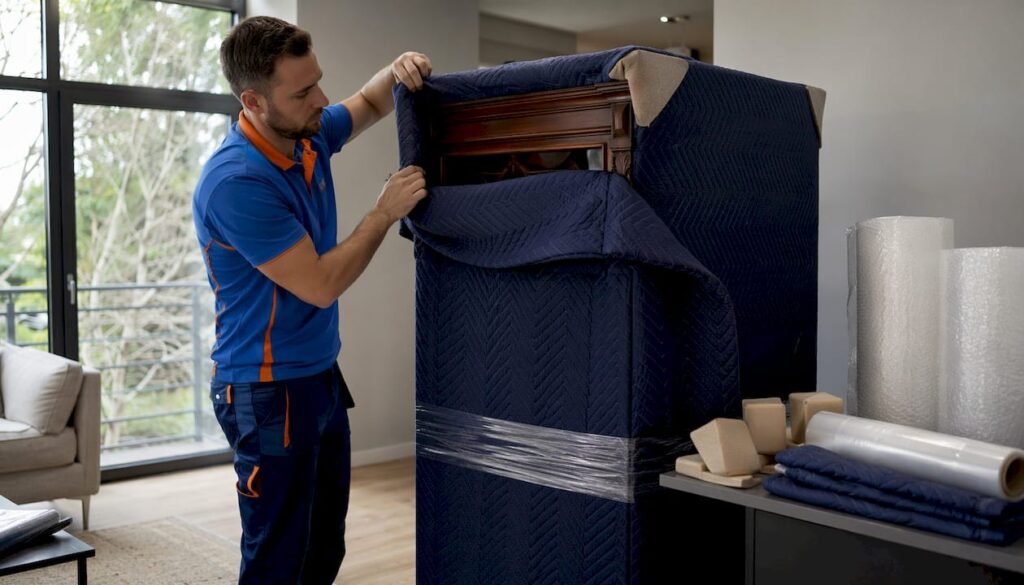
A furniture wrapping service is the professional application of protective materials to furniture and household items before transit, storage, or refurbishment. Professionals use industrial-grade materials to shield pieces from scratches, dents, vibration damage, and moisture throughout a move or during long-term storage. It is not simply rolling plastic around a sofa. It is a layered, assessed process that matches the right protection to each surface and finish.
Common materials used in a professional furniture wrapping service include:
- Moving blankets (heavy quilted, industrial weight) for shock absorption
- Stretch wrap to secure blankets and prevent shifting
- Bubble wrap for fragile components and glass elements
- Corner protectors for delicate edges and protruding legs
- Webbing straps to hold padding in place without adhesive contact
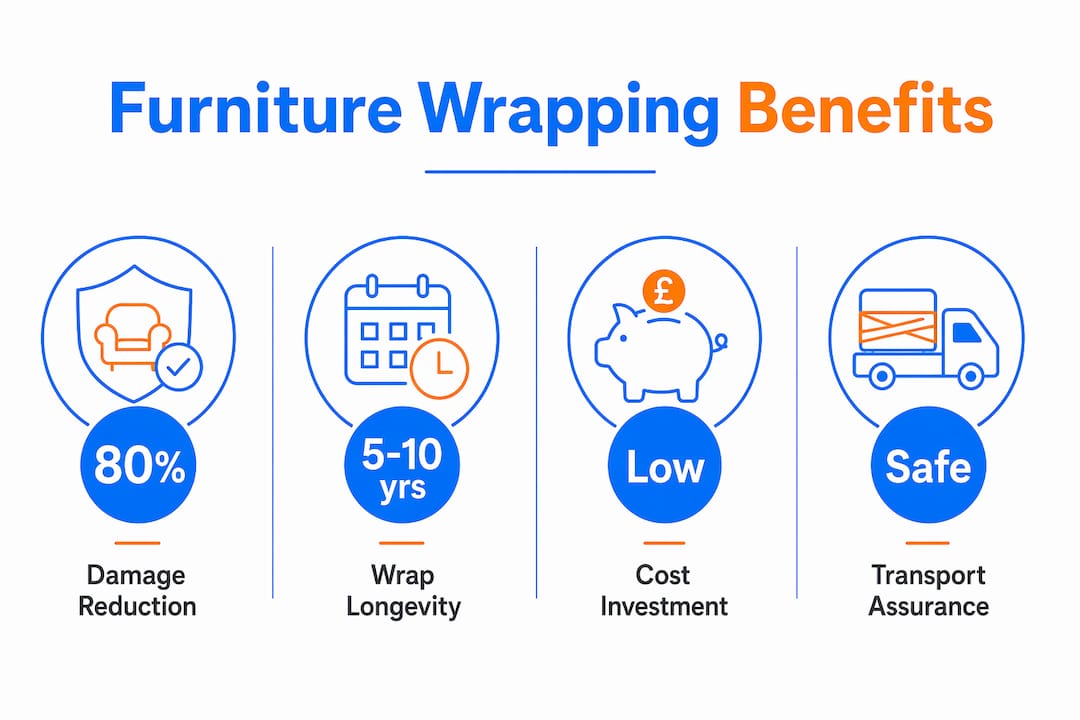
The service suits homeowners preparing for a house move, businesses relocating offices, and anyone placing furniture into storage. The primary goal is damage prevention, though vinyl wrapping also offers a cost-effective option for surface cosmetic improvements, with typical vinyl wraps lasting 5–10 years before replacement is needed.
What are the main benefits of a furniture wrapping service?
Wrapping furniture properly reduces damage risks including scratches, dents, moisture infiltration, and pressure marks. For high-value or sentimental pieces, that protection directly preserves resale and functional value. A wardrobe that arrives unmarked is worth considerably more than one with scuffed veneer.
Key benefits at a glance:
- Prevents surface scratches and finish damage during loading and unloading
- Keeps upholstered items clean and free from dust, grime, and pet hair
- Protects fragile edges, glass panels, and decorative details
- Maintains resale value of quality furniture
- Offers a cost-effective alternative to full refurbishment or replacement
- Reduces cleaning requirements after a move
The cost of repairing or replacing a damaged piece of furniture typically far exceeds the cost of wrapping it properly beforehand. For businesses moving office furniture, that calculation applies at scale across desks, chairs, and storage units. Professional wrapping also speeds up the unpacking process, since items arrive clean and undamaged and can be placed directly into position.
Where is furniture wrapping commonly used?
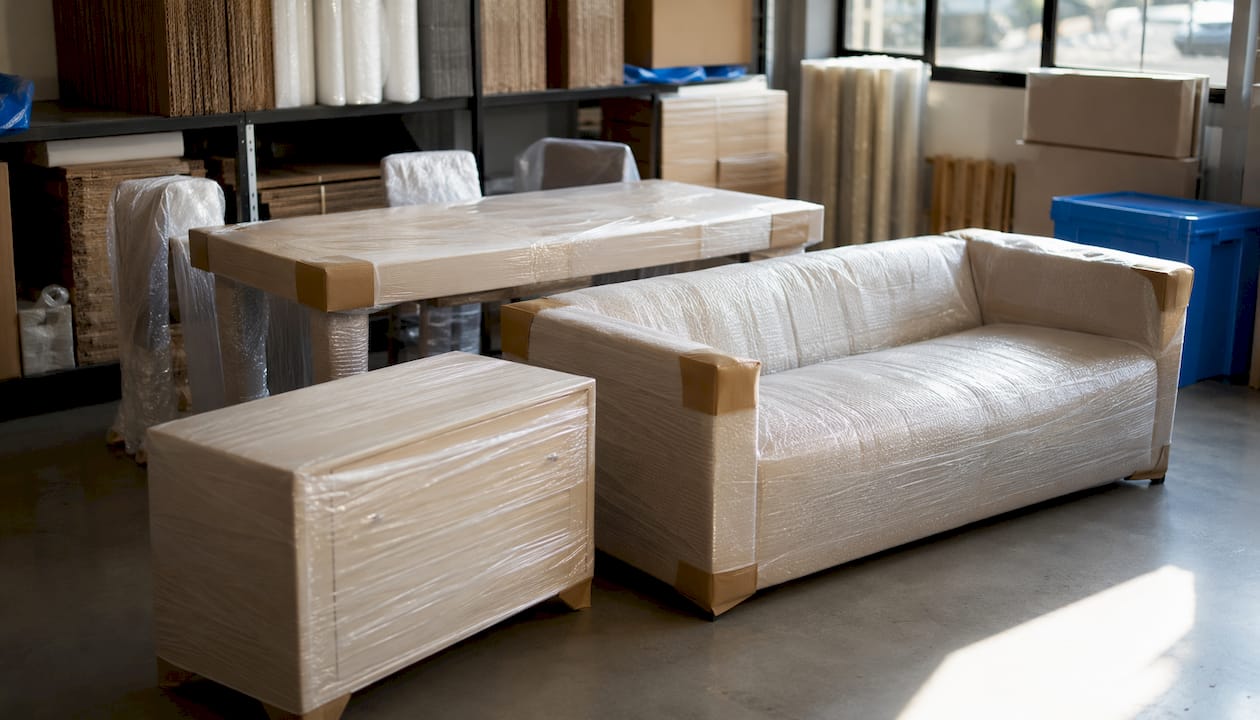
The most frequent application is residential and office removals, where furniture faces the greatest handling risk. Every stage of a move, from lifting through doorways to loading onto a lorry and unloading at the destination, creates opportunities for damage if items are unprotected.
Beyond removals, wrapping is widely used for:
- Short and long-term storage, where dust, moisture, and repeated handling are ongoing risks
- Furniture refurbishment, particularly vinyl wrapping of kitchen doors, cabinet fronts, and worktops
- Hospitality and retail settings, where high-turnover furniture needs protection during seasonal reconfigurations
- Tenancy changeovers, protecting furniture between lettings
Furniture types most frequently wrapped include sofas, wardrobes, dining tables, chests of drawers, sideboards, armchairs, and bookcases. Glass-fronted pieces, antiques, and anything with a polished or lacquered finish warrant particular care. If you are arranging a furniture delivery for a rental property, wrapping is especially worthwhile given the repeated handling involved.
How does professional furniture wrapping actually work?
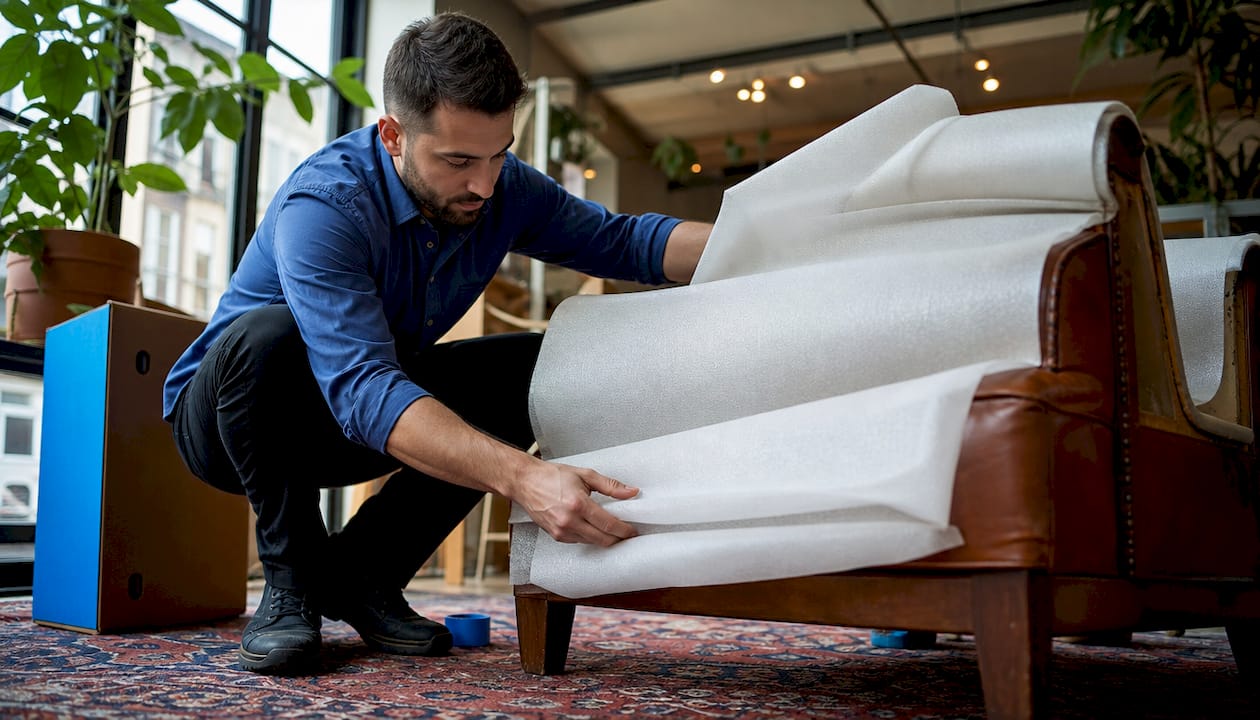
The pad-wrap method is the industry standard. It uses heavy quilted moving blankets tied with webbing straps rather than adhesive tape, so nothing sticky ever contacts the furniture finish. Each piece is wrapped individually before it leaves its original room, and the wrapping stays on until the item reaches its final position at the destination.
Materials used in sequence:
- Heavy quilted moving blankets as the primary protective layer
- Corner board or foam corner protectors on vulnerable edges
- Stretch wrap applied over the blanket to hold it in place
- Webbing straps for secure fastening without residue risk
The wrapping process, step by step:
- Assess the item: finish type, fragile points, protruding hardware, and glass components
- Apply moving blankets as the first layer across all surfaces
- Add corner protectors to edges and legs
- Secure the blanket with stretch wrap or webbing straps, never tape directly on the finish
- Load the wrapped piece onto the lorry, heaviest items at the bottom, padding between every piece
- Transport without unwrapping; unwrap only once the item is in its final room
Pro Tip: Never apply plastic wrap directly to wood or leather. Condensation can develop under plastic in a poorly ventilated lorry, causing finish damage such as peeling, cracking, or mould. Always use a breathable blanket layer first.
For guidance on handling particularly delicate items, fragile item courier handling follows the same layered-protection principles.
What are the potential downsides to consider?
Furniture wrapping is not without limitations, and understanding them helps you make the right choice for each piece.
- Moisture entrapment: Shrink wrap can trap moisture against wood or leather finishes, particularly in uncontrolled temperature environments. Breathable padding must go on first.
- Adhesive residue: Using standard tape directly on furniture surfaces risks leaving sticky marks or pulling off varnish. Webbing straps or non-residue tape are the correct choice.
- Not every item needs wrapping: Robust, low-value, or already-damaged pieces may not justify the time or cost. Wrapping decisions should be selective, not blanket.
- Environmental impact: Single-use plastic stretch wrap generates waste. Reusable moving blankets are the more sustainable option for regular movers or businesses.
- Cost at volume: Wrapping a full household or large office can add meaningfully to overall removal costs, particularly for complex or oversized items.
How much does furniture wrapping cost, and how long does it last?
Pricing varies by item size, material type, and whether you hire professionals or source materials yourself. For shrink wrapping, professional services charge between $10 and $50 per item (note: this figure is from a US source; UK pricing varies by provider and is not publicly standardised). For a full removal, pad-wrap protection is typically included as standard by reputable removal companies rather than charged as an extra.
Factors that affect the overall cost:
- Number of items requiring wrapping
- Size and complexity of each piece
- Type of wrapping selected (reusable blankets vs single-use plastic)
- Whether wrapping is included in a full removal package or booked separately
For longevity, vinyl wraps on kitchen doors typically last 5–10 years, making them suitable for cosmetic updates. Protective wrapping used during transit is single-use by design. Reusable moving blankets, when properly maintained, last for many jobs and represent better long-term value for businesses or frequent movers.
Ready to protect your furniture with a trusted team?
At Westlondonremoval, we treat every piece of furniture with the same care we would give our own. Our house removals in West London include professional wrapping and padding as standard, so your belongings arrive exactly as they left. With over 1,000 satisfied clients and transparent pricing from the start, there are no surprises on moving day. Get in touch today for a free, no-obligation quote.
Key takeaways
A furniture wrapping service uses layered industrial materials to prevent damage during transit or storage, and vinyl wrapping extends that principle to affordable cosmetic transformation lasting 5–10 years.
| Point | Details |
|---|---|
| Core purpose | Protects furniture from scratches, dents, moisture, and dirt during moves or storage. |
| Pad-wrap method | Heavy quilted blankets secured with webbing straps, never adhesive tape on the finish. |
| Plastic on wood or leather | Never apply plastic wrap directly; always use a breathable blanket layer first. |
| Vinyl wrap longevity | Vinyl wraps on kitchen doors typically last 5–10 years as a cost-effective cosmetic update. |
| Cost structure | Professional pad-wrap is usually included in full removal packages, not charged as an extra. |