
A moving checklist is a structured planning tool that prevents the costly reactive decisions most people make when relocating without a clear plan. Used correctly, it is the single most effective way to control your moving budget before a single box is packed. Structured moving checklists save between £300 and £1,000 by eliminating last-minute supply purchases, rush service fees, and damage caused by poor packing. Westlondonremoval sees this pattern repeatedly: movers who arrive with a checklist spend less, stress less, and finish faster than those who wing it. Understanding why moving checklist saves money is not complicated. The savings come from five specific areas, each explained below.
Why a moving checklist saves money on unexpected costs
Unplanned expenses are the biggest budget killer in any move. Without a checklist, you buy packing tape at the corner shop at twice the price, call a removal firm with 48 hours’ notice, and discover on moving day that the loft has not been touched. Each of those moments costs real money.
A well-structured checklist acts as a defensive budget tool. It prompts you to buy supplies in bulk from a wholesaler weeks in advance, book your removal firm early to avoid premium rates, and audit every room, including storage areas, before the lorry arrives.
The financial impact of skipping this preparation is significant:
- Last-minute packing supplies bought locally cost two to three times more than bulk orders placed online.
- Rush booking fees for removal firms can add a flat premium on top of standard rates.
- Damage from rushed packing leads to replacement costs that no checklist user should face.
- Overtime charges accumulate fast when movers wait for you to finish packing on the day.
Planning combined with strategic timing saves £500–£2,000 on total relocation costs. That figure reflects the compounding effect of avoiding multiple small mistakes, not one single saving. A checklist is the mechanism that prevents each of those mistakes from happening.
Pro Tip: Keep a dedicated moving binder or digital folder with all quotes, receipts, and supplier contacts. Organised documentation prevents billing disputes and supports any insurance claims after the move.
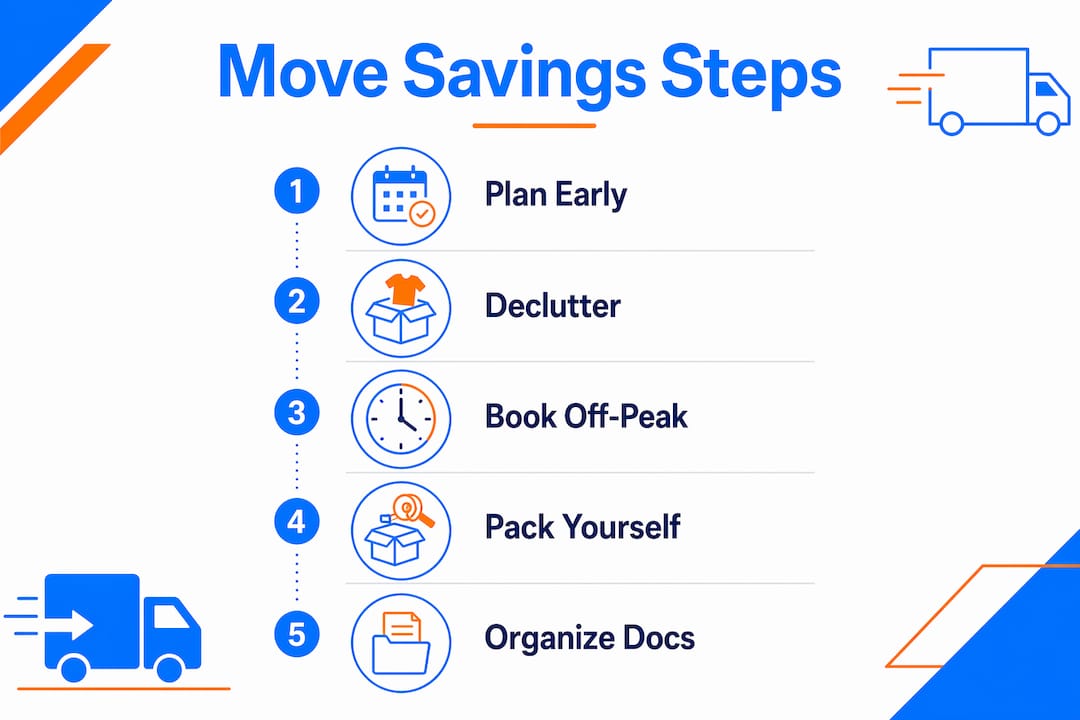
How does decluttering before your move cut removal costs?
Decluttering before requesting quotes is the most underused cost-saving strategy in residential moving. Most people sort their belongings after they have already received a price. That is the wrong order.
Removal firms price by volume and weight. A smaller shipment produces a lower base price, full stop. Decluttering before requesting quotes is critical because it directly reduces the figure every firm quotes you. If you declutter after accepting a quote, you have already locked in a higher price.
“Removing 1,000 lbs from your shipment saves £150–£300 per 500 miles on a long-distance move. For local moves, volume reduction cuts lorry size and journey time, both of which reduce your final bill directly.”
A checklist makes decluttering systematic rather than emotional. Use this sequence:
- Walk every room with a checklist and label items as Keep, Sell, Donate, or Dispose.
- List sell items on Facebook Marketplace or Gumtree at least four weeks before moving day.
- Book a charity collection for donation items so they leave the property before packing begins.
- Arrange a council bulky waste collection or skip hire for items that cannot be sold or donated.
- Request removal quotes only after the property reflects your actual shipment size.
The furniture removal between tenancies checklist from Westlondonremoval follows exactly this logic. Reducing inventory before the quote stage is the single step that influences your baseline price most directly.
Pro Tip: Bundle smaller items into box lots when selling online. A box of kitchen gadgets sells faster than individual listings and clears space more quickly.
When is the cheapest time to book a removal, and how does a checklist help?
Timing your move correctly is one of the most reliable ways to reduce costs without cutting any services. Moves scheduled mid-week or in non-summer months reduce labour and rental rates by 20%–30%. That is a direct cash saving for the same quality of service.

A checklist forces you to think about scheduling weeks in advance, which is exactly when you have the flexibility to choose cheaper dates. Last-minute movers have no flexibility. They pay whatever rate is available on the day they need.
Off-peak periods that consistently produce lower quotes include:
- Monday to Thursday bookings, which carry lower demand than Friday and weekend slots.
- September to March moves, which fall outside the summer peak when removal firms are busiest.
- Mid-month dates, which avoid the end-of-month rush driven by tenancy agreements.
Flexibility in scheduling and early organised planning save more than simply cutting professional services. Booking a full-service removal firm on a Tuesday in october costs less than a man-and-van booked on a Saturday in july. The checklist is what gives you the lead time to make that choice.
Pro Tip: Add a “confirm move date” task to your checklist at least six weeks out. Locking in an off-peak slot early gives you the best rates and the widest choice of available firms.
Does packing yourself before movers arrive actually save money?
Packing yourself saves on professional packing fees, but only if every item is fully packed before the removal team arrives. This is where most self-packers lose the savings they expected to make.
Moving companies charge hourly if packing is not completed before they arrive. Movers standing idle or packing items themselves while on the clock adds directly to your final bill. The loft, the under-stairs cupboard, and the garden shed are the rooms most often forgotten. A checklist eliminates that oversight by listing every storage area explicitly.
A room-by-room packing strategy, built into your checklist, produces the best results:
- Label every box with its destination room and a brief contents description to speed up unloading.
- Pack room by room rather than grabbing items from across the property, which creates confusion and gaps.
- Audit storage areas including lofts, garages, and outbuildings at least one week before moving day.
- Source free boxes from supermarkets, off-cuts from local shops, or community groups on Facebook before buying new ones.
- Use soft furnishings such as towels, duvets, and clothing to wrap fragile items and reduce the amount of bubble wrap you need to buy.
Packing materials cost £150–£300 when purchased new. Sourcing free boxes and using household items as padding cuts that figure significantly. The professional packing services offered by Westlondonremoval are worth considering for fragile or high-value items, where the cost of damage far outweighs the fee for expert packing.
Pro Tip: Set a “packing complete” deadline on your checklist for the evening before moving day. Everything must be boxed, sealed, and labelled by that point. No exceptions.
Key takeaways
A moving checklist is the most reliable budget control tool available to anyone planning a relocation, because it prevents the reactive decisions that turn a manageable move into an expensive one.
| Point | Details |
|---|---|
| Checklists prevent reactive spending | Buying supplies in bulk and booking early avoids the premium costs of last-minute decisions. |
| Declutter before requesting quotes | Reducing volume and weight before firms price your move lowers the baseline quote directly. |
| Off-peak scheduling cuts rates | Booking mid-week or outside summer months reduces labour and rental costs by 20%–30%. |
| Complete packing before movers arrive | Finishing all packing in advance avoids costly hourly charges while movers wait on the day. |
| Documentation protects your budget | Keeping receipts, quotes, and inventories in one place prevents billing disputes and supports claims. |
Our honest view on checklists and budget control
We have worked with over 1,000 clients across West London, and the pattern is consistent. The movers who arrive prepared, with a checklist they have actually used, spend less and experience fewer problems on the day. The movers who arrive without one spend the first hour finding things they forgot to pack and the last hour disputing a bill they did not expect.
The most common costly mistake we see is treating a moving checklist as a task list rather than a budget management tool. Those are two very different things. A task list tells you what to do. A budget tool tells you what each decision costs and when to make it. The checklist earns its value in the weeks before moving day, not on the day itself.
The second mistake is decluttering after accepting a quote. By that point, the price is set. Decluttering before you invite any firm to assess your property is the one action that influences every quote you receive. We tell every client this, and the ones who follow it consistently pay less.
Saving money is not about cutting professional services. It is about scheduling flexibility and organised preparation. A good removal firm combined with a well-used checklist produces better outcomes than either one alone. We are not saying that because we are a removal firm. We are saying it because the evidence from our own clients confirms it every time.
— West London removals
Planning your move with Westlondonremoval
A checklist gives you the plan. Westlondonremoval gives you the team to execute it.

Westlondonremoval offers house removals across West London with transparent pricing, no hidden fees, and same-day availability for urgent bookings. Whether you are moving a full household or need a reliable man-and-van service, the team is fully insured and experienced in making budget-conscious moves work. Booking early locks in the best rates and gives you the widest choice of dates. If you are based in or around Chiswick, you can get a quote directly through the Chiswick removals page and confirm your slot before peak season fills the calendar.
FAQ
What is a moving checklist?
A moving checklist is a structured list of tasks, purchases, and decisions organised by timeline before a move. It covers everything from booking removal firms to labelling boxes and notifying utility providers.
How much money can a moving checklist save?
Structured moving checklists save between £300 and £1,000 by preventing last-minute purchases, rush fees, and damage from poor packing. Combined with strategic timing, total savings can reach £500–£2,000.
When should I start using a moving checklist?
Start at least eight weeks before your move date. This gives you enough time to declutter before requesting quotes, book an off-peak slot, and complete all packing before the removal team arrives.
Does decluttering really affect my removal quote?
Yes. Removal firms price by volume and weight, so a smaller shipment produces a lower quote. Decluttering before requesting quotes is the most direct way to reduce your baseline moving cost.
What happens if packing is not finished when movers arrive?
Moving companies charge hourly if packing is incomplete on arrival. Movers packing items on the clock, or waiting while you finish, adds directly to your final bill and can significantly exceed the original estimate.