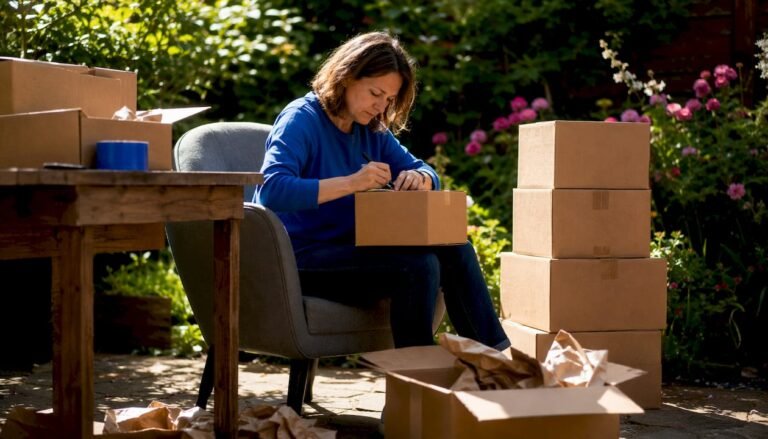
Knowing which pieces to take apart before moving day can be the difference between a smooth removal and a stressful one. The short answer: disassemble furniture before moving only when it is too bulky to fit through doorways or stairwells intact, or when breaking it down makes it safer and lighter to carry. You do not need to dismantle everything you own.
The furniture types that most commonly need taking apart include:
- Bed frames (especially king and super-king sizes with large headboards)
- Dining tables with removable legs or extension leaves
- Wardrobes and tall cabinets that cannot pass through narrow hallways
- Sofas and sectional units with detachable sections or legs
- Desks and modular bookshelves
The benefits are real: easier handling, reduced damage during transit, and safer lifting for everyone involved. The risks are equally real. Lose a bag of screws or force apart a glued joint, and you may not be able to put the piece back together. Planning, labelling hardware carefully, and talking to your removal team in advance will prevent most of those problems before they start.
Table of Contents
- What tools do you need to disassemble furniture?
- Step-by-step guide to taking apart common furniture types
- How to pack disassembled furniture parts safely
- How to reassemble furniture after your move
- What can professional movers do regarding disassembly?
- How to prepare your furniture before movers arrive
- Expert advice on when to stop disassembling and what to avoid
- Westlondonremoval takes the stress out of moving day
- Key takeaways
What tools do you need to disassemble furniture?
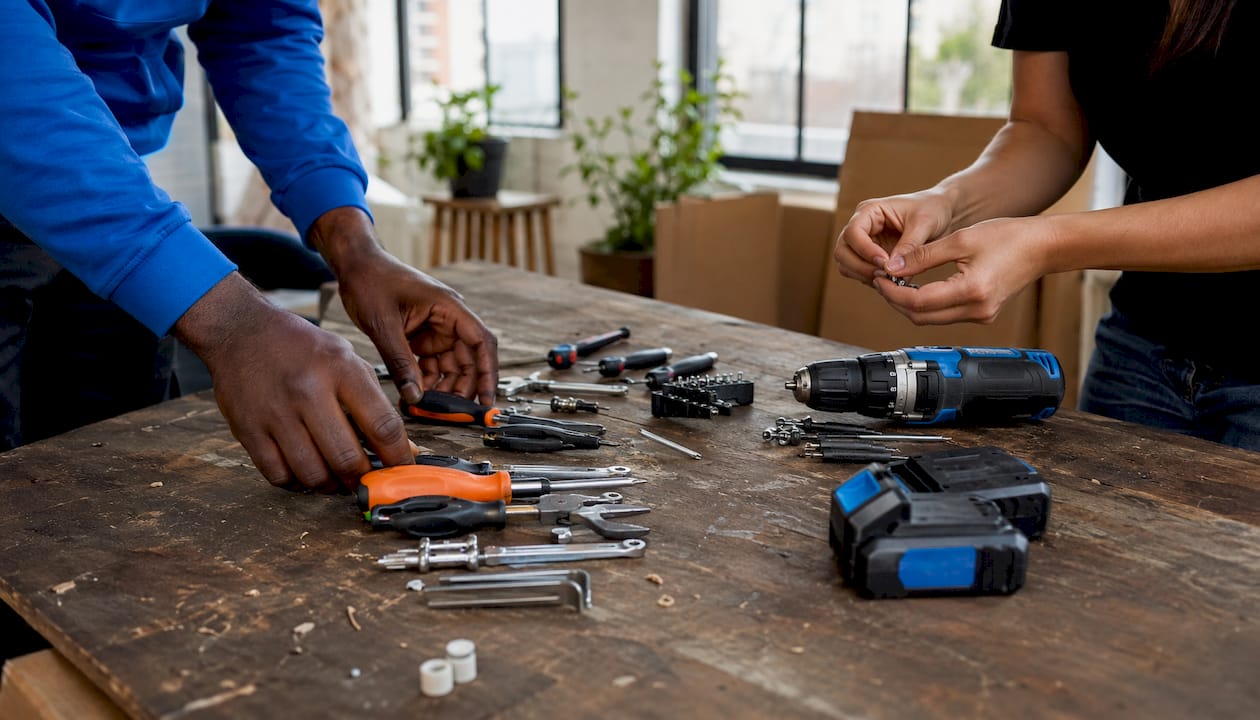
Having the right tools ready before you start saves time and protects your furniture. Most household furniture can be taken apart with a small set of basic items.
Core tools:
- Phillips and flat-head screwdrivers (a set covering multiple sizes)
- Allen keys or hex wrenches (a full metric set covers most flatpack furniture)
- Adjustable spanner or wrench
- Hammer and rubber mallet
- Pliers (useful for gripping stubborn bolts)
Organisation supplies:
- Resealable zip bags for screws, bolts, and small fittings
- Permanent marker and adhesive labels
- Masking tape (for securing hardware bags to furniture)
- Protective gloves
Match your tools to the fasteners on each piece before you start. IKEA and most flatpack furniture uses cam locks and hex bolts, so an Allen key set is non-negotiable. Older solid wood furniture often uses Phillips screws or traditional bolts that need a spanner. Checking fastener types in advance avoids the frustration of stopping mid-disassembly to hunt for the right tool.
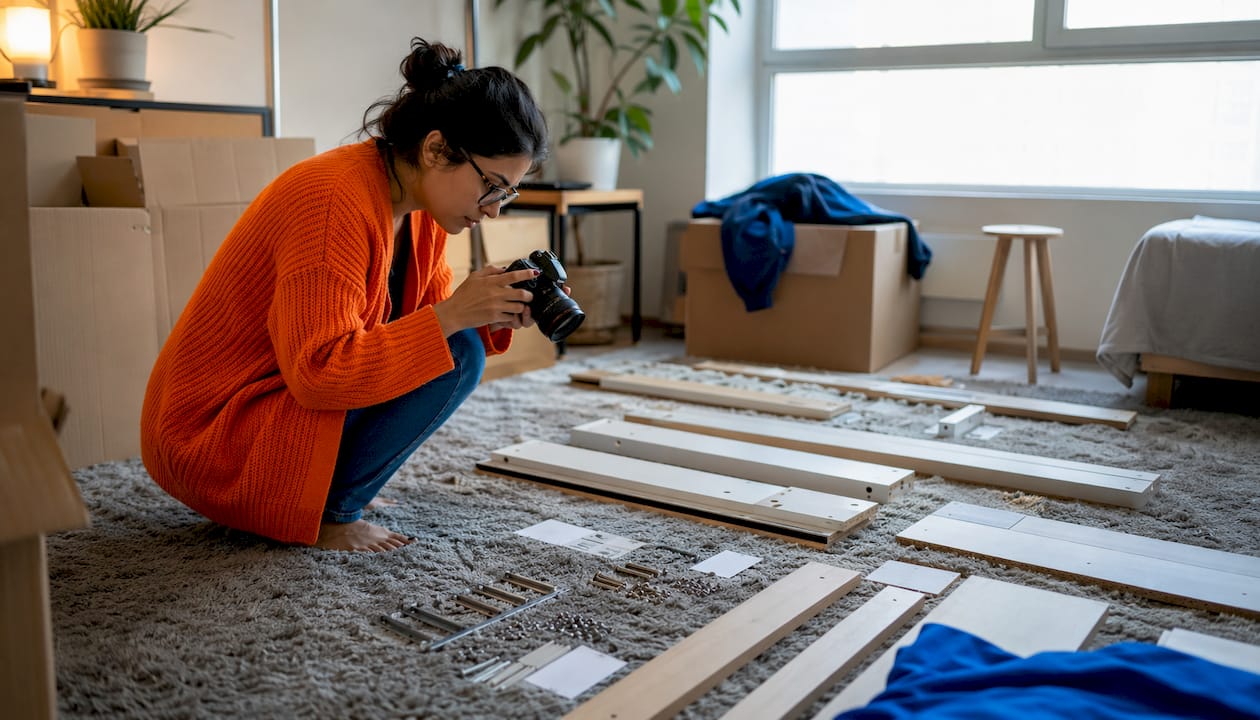
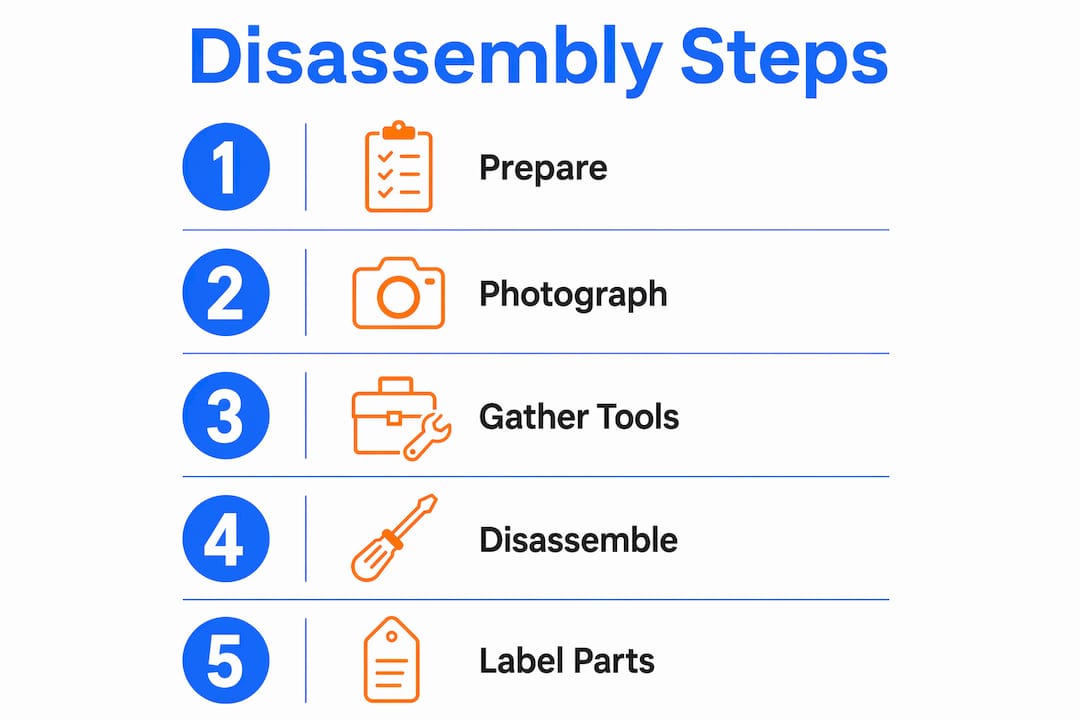
Pro Tip: Take a photo of each piece from several angles before you remove the first screw. Those photos become your reassembly guide and cost nothing.
Step-by-step guide to taking apart common furniture types
The goal is not to disassemble everything. Remove only what makes the move safer, lighter, or able to fit through access points. Here is how to approach the most common pieces.
Bed frames
- Strip all bedding and remove pillows.
- Lift the mattress off and stand it against a wall.
- Remove the slats and bundle them together with tape or cable ties.
- Unscrew or unbolt the side rails from the headboard and footboard.
- If the headboard is large or heavy, detach it last and wrap it separately.
Stop once the frame is in manageable sections. There is rarely any need to go further.
Dining tables
- Remove any extension leaves first and wrap them individually.
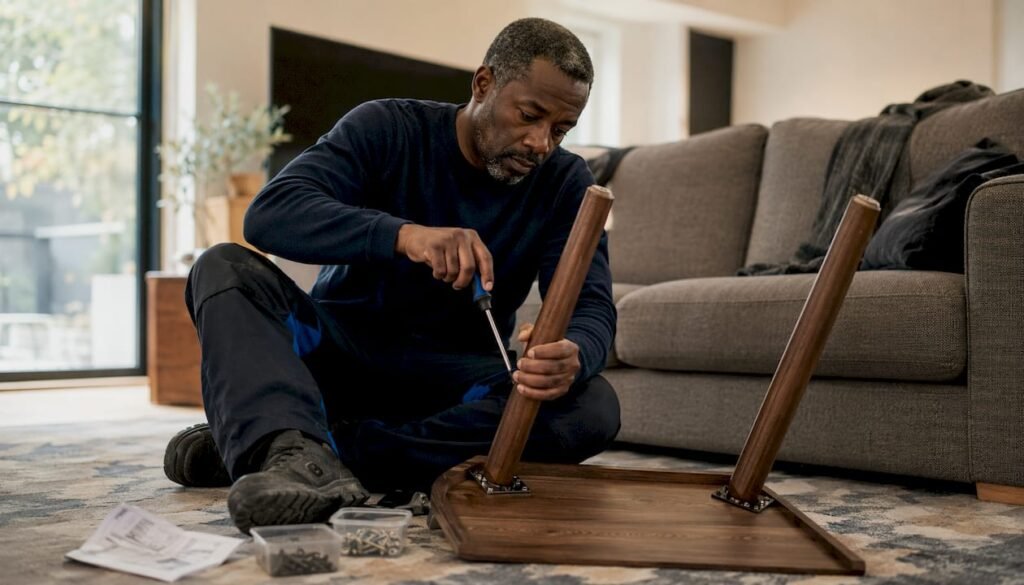
- Unscrew or remove the legs. Most modern tables have legs that bolt directly to the underside.
- Keep all leg bolts in a labelled bag taped to the tabletop.
Removing table legs typically adds some additional preparation time, which is well worth the protection it gives to door frames and walls.
Sofas and sectional units
- Remove all cushions and slipcovers and pack them separately.
- Twist off or unscrew the legs. This single step often prevents the sofa snagging on carpet or catching stair edges.
- For sectionals, locate the connecting clips or brackets between sections and release them. Most separate cleanly without tools.
- Only disassemble the frame itself if the sofa genuinely will not pass through the doorway otherwise.
Wardrobes and cabinets
- Empty all contents completely.
- Remove shelves and any adjustable fittings.
- Unscrew doors at the hinges and wrap them separately. Be careful not to strip the screws.
- Removing drawers and shelves reduces weight significantly without requiring full disassembly of the carcass.
- Never force joints that feel glued or nailed. Splitting the wood is irreversible.
Desks and bookshelves
- Pull out all drawers and pack them separately.
- Remove keyboard trays, monitor arms, or cable management fittings.
- L-shaped desks usually separate into two main sections at a central bracket. Locate that bracket first.
- Modular bookshelves disassemble section by section. Keep each section’s hardware in its own labelled bag.
How to pack disassembled furniture parts safely
Packing disassembled furniture well is just as important as taking it apart correctly. Scratches, dents, and moisture damage most often happen during transit, not during disassembly.
Wrapping and padding:
- Use furniture blankets or moving pads as the first layer on wood and leather surfaces. These are breathable and protect the finish.
- Avoid wrapping wood or leather directly in plastic. Plastic traps condensation, which can cause mould and surface damage, particularly in the UK’s damp climate. Use plastic wrap only as an outer stabilising layer over the blanket.
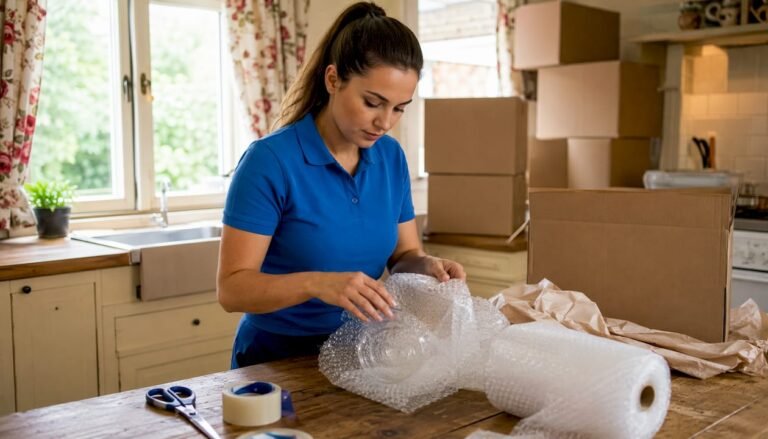
- Wrap glass panels, mirrors, and doors in bubble wrap, then blankets, and label them clearly as fragile.
- Protect sharp corners and edges with foam corner guards or folded cardboard.
Organising hardware:
- Place screws, bolts, and fittings for each piece into a separate resealable bag.
- Label each bag clearly with the furniture name and the specific location (for example, “bed frame, headboard bolts”).
- Tape the bag directly to the furniture piece it belongs to. If it travels with the piece, it cannot get lost.
Loading and stacking:
- Keep similar parts bundled together. Slats from a bed frame, for instance, should be taped as a bundle rather than scattered loose.
- Never stack heavy items on top of wrapped panels or doors.
- Keep fragile elements in a separate, clearly marked area of the removal van.
How to reassemble furniture after your move
Reassembly goes smoothly when you have prepared well. The photos you took before disassembly and the labelled hardware bags are your two most valuable resources at this stage.
Practical steps:
- Work in reverse order of disassembly. If the side rails went on before the headboard during assembly, attach the headboard first when rebuilding.
- Open all hardware bags and check for missing pieces before you start. Catching a missing bolt early saves a frustrating mid-build pause.
- Use the correct tools and tighten fixings gradually rather than fully tightening each one before moving to the next. This keeps the frame aligned.
- Do not force joints that feel stiff or misaligned. Check the photos and reassess the order of assembly.
- Reinforce only as the original design intended. Adding extra screws or brackets to a flatpack frame can weaken it rather than strengthen it.
If a piece is complex, delicate, or was assembled by a professional originally (such as a bespoke wardrobe or an antique cabinet), consider booking a professional to reassemble it. The cost is modest compared to the risk of damage. You can also check our guide on flatpack furniture delivery for more on professional assembly options.
What can professional movers do regarding disassembly?
Most UK removal companies will disassemble and reassemble standard items such as bed frames, dining tables, and basic wardrobes, but this is usually an additional service that needs to be arranged in advance. Communicating disassembly needs to movers beforehand ensures they bring the right tools and allocate enough time on the day.
What movers typically handle (when pre-arranged):
- Bed frames and divan bases
- Standard dining tables and chairs
- Basic wardrobe carcasses
- Sofas with removable legs or sections
What is often excluded or charged separately:
- Pool tables and snooker tables (specialist dismantling required)
- Antiques and fragile heirloom pieces
- Pianos and heavy specialist items
- Furniture with glued or nailed joints that risk permanent damage
If you choose to disassemble furniture yourself to save on costs, let your removal company know during the quoting stage. Disassembly adds time to a move, and most companies factor this into their pricing. Doing it yourself can reduce that time, which may lower your quote. However, if the movers did not take it apart, they may not be able to guarantee a successful reassembly at the other end. Always confirm the scope clearly before moving day.
How to prepare your furniture before movers arrive
Good preparation on your part makes the removal team’s job faster and reduces the risk of damage to your home and belongings.
Before the team arrives:
- Decide which pieces you will disassemble yourself and which you are leaving to the movers. Confirm this with the company in advance.
- Remove all loose items from drawers, shelves, and cupboards. Pack these separately.
- Take cushions off sofas and chairs and pack them in bags or boxes.
- Label all hardware bags and tape them securely to their corresponding furniture pieces.
- Measure doorways, hallways, and stairwells. If a piece will not fit through intact, disassemble it before the team arrives rather than discovering the problem on the day.
Protecting your home:
- Lay down floor protection (cardboard or specialist floor runners) along the route from each room to the front door.
- Use door frame protectors or folded blankets on door frames where large pieces will pass through.
- Clear access routes completely. Furniture in hallways or on landings creates a hazard and slows the team down.
A complete moving checklist for West London residents can help you track all of these steps alongside the rest of your move preparation.
Expert advice on when to stop disassembling and what to avoid
The industry standard is clear: disassemble only to the point where the piece remains structurally stable. If a step makes the furniture feel wobbly or causes joints to flex, stop there. Going further risks permanent damage, particularly with older pieces or anything with glued or nailed connections.
Professional movers generally prefer to move furniture intact when clearance allows. Taking a piece apart is a means to an end, not the goal itself. A well-wrapped, intact sofa is often safer in transit than one broken into panels that can flex, scratch each other, or arrive with missing fixings.
Common mistakes to avoid:
- Forcing glued joints. Splitting wood panels is irreversible and expensive to repair.
- Mixing hardware from different pieces into a single bag. One unlabelled bag of mixed screws can delay reassembly by hours.
- Wrapping wood or leather directly in plastic. Always use a breathable blanket as the first layer.
- Over-disassembling flatpack furniture that has already been assembled and disassembled multiple times. Cam locks and chipboard fixings weaken with repeated use.
Pro Tip: A dresser rarely needs full disassembly. Remove the drawers and any hardware that could snag, protect the frame with a blanket, and move it as a unit. The same logic applies to most cabinets.
The decision to disassemble should always weigh the risk of damage during transit against the risk of over-disassembly. Professional wrapping and careful handling often mitigate transit damage without any dismantling at all. When in doubt, ask your removal company before you reach for the Allen key.
Westlondonremoval takes the stress out of moving day
Handling disassembly yourself is absolutely possible with the right preparation. But if you would rather hand the whole process to a trusted team, Westlondonremoval offers professional house removals in West London with furniture disassembly and reassembly included when arranged in advance. No hidden fees, no last-minute surprises on the doorstep.

With over 1,000 satisfied clients and transparent pricing from the start, Westlondonremoval handles everything from bed frames and wardrobes to bulky sofas, so you can focus on settling into your new home. The team is fully insured, available for same-day bookings, and covers all of West London including removals in Chiswick and surrounding areas. Get your free quote today and let us take care of the heavy lifting.
Key takeaways
Disassembling furniture before a move reduces damage risk and improves safety, but only when done selectively and stopped at the point of structural stability.
| Point | Details |
|---|---|
| Disassemble selectively | Only take apart pieces that are too bulky for doorways or stairwells, or that are unsafe to lift intact. |
| Stop at stability | If a step makes the piece feel wobbly or causes joints to flex, stop. Over-disassembly causes permanent damage. |
| Label everything | Tape labelled hardware bags directly to the furniture piece they belong to, and photograph before you start. |
| Wrap correctly | Use breathable moving blankets as the first layer on wood and leather. Plastic wrap traps moisture and can cause mould. |
| Westlondonremoval | Offers fully insured house removals across West London with disassembly and reassembly arranged in advance at transparent prices. |