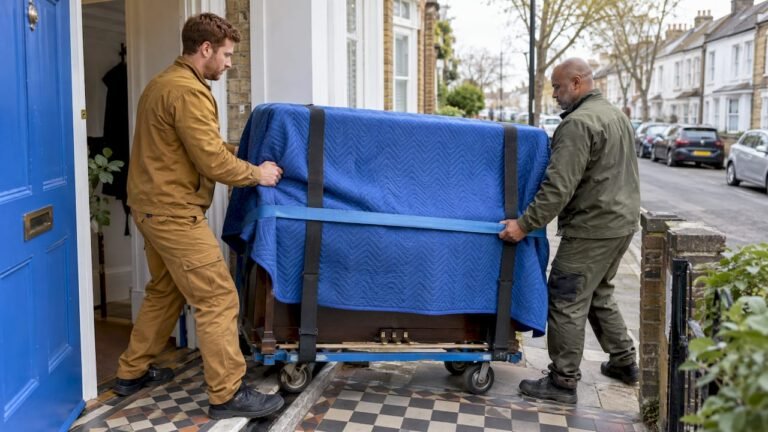
Moving house is stressful because dozens of small demands land at once: packing, money, deadlines, paperwork and the emotional pull of leaving a familiar home. The good news is that most of the pressure comes from tasks you can plan, spread out or hand over. At West London Removal we take on the packing, lifting and transport, so you can keep your energy for the decisions that are yours.
TL;DR
- Moving stress is common and normal: in a May 2025 survey, a third of UK homeowners named moving among the most stressful life events.
- It comes from many small decisions, fixed deadlines, physical strain and broken routines, not from any weakness in you.
- Start eight weeks out, work backwards from moving day and spread packing over several short sessions.
- Hand over the heaviest jobs (packing, lifting, transport) so you can protect your sleep, meals and routines.
- If low mood, anxiety or poor sleep persist, speak to your GP.
Table of Contents
- Why moving feels so stressful
- Signs the stress is getting to you
- A plan that spreads the load
- Hand over the jobs that drain you most
- If you are moving a business, a flat or a shop
- Perspective
- Plan your move with us
- When to speak to your doctor
- FAQ
- Sources
Why moving feels so stressful
A move is not one task. Mental Health 360 describes it as a bundle of demands at once: packing, money, utilities, addresses, transport, work, children, pets and uncertainty about the new area. Home also stands for familiarity and security, so leaving it can feel emotional even when you chose to go. You can want the new place and still miss the old one.
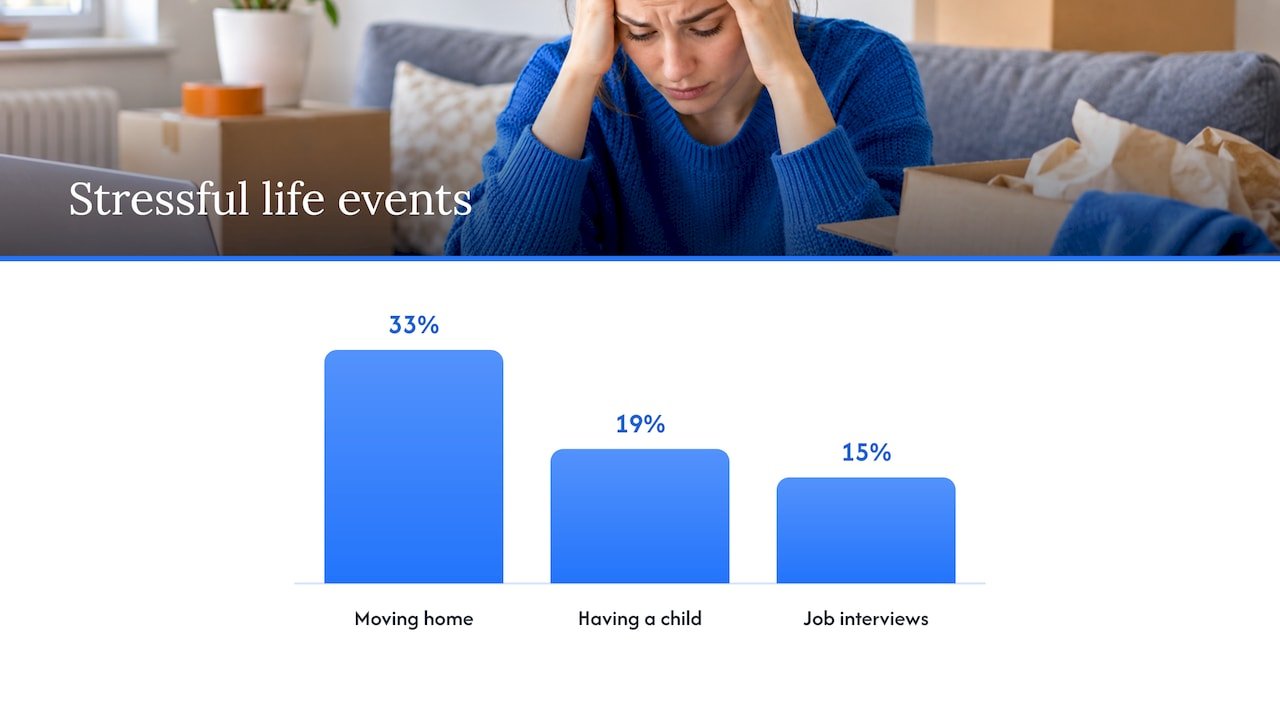
The pressure is widely felt. A May 2025 OnePoll survey of 2,000 UK homeowners, reported by The Independent, found 33% named moving home among the most stressful life events, ahead of having a child (19%) and job interviews (15%). A Legal & General Retail poll found 47% of people felt increased stress, 41% anxiety and 31% sleep deprivation.
The four main pressure points
Mentally United’s guide names four drivers, and they apply whether you are a family leaving a house, a tenant changing flats or a student moving between terms:
- Decision fatigue. Hundreds of keep-or-bin choices wear you down.
- Money and deadlines. Deposits, movers and overlapping rent leave no room to slip.
- Physical strain. Lifting, skipped meals, headaches and poor sleep.
- Broken routines. The small habits that keep you steady disappear for weeks.
Knowing which one is hitting you tells you what to fix. Decision fatigue needs fewer decisions. Physical strain needs fewer boxes carried by you.
Signs the stress is getting to you
Common signs during a move include persistent irritability, poor sleep, skipped meals and rising tension with a partner or housemate. Mind’s stress guide lists moving house among everyday life stressors, and says stress can show as feeling irritable, overwhelmed, anxious or unable to enjoy things.
Feeling more tired and anxious than usual is normal during a move, and it usually eases once things settle. Feeling wobbly does not mean you chose wrongly.
A plan that spreads the load
The most effective way to cut stress is to stop everything landing in the last week. Work backwards from moving day. This timeline combines the staged checklists from Sell House Fast and Benenden Health:
| When | What to do |
|---|---|
| 8 weeks before | Confirm the date, get removal quotes, start decluttering room by room, set a budget with a buffer |
| 4 weeks before | Book your removals, pack non-essentials, tell utilities, insurer and broadband, arrange mail redirection |
| 2 weeks before | Label boxes by room, arrange childcare |
| 1 week before | Pack an essentials box, defrost the freezer, confirm key handover |
Our house moving checklist for West London residents and moving day checklist expand each stage. Our change of address checklist covers who needs your new address.
Cut the number of decisions
Mental Health 360 suggests one simple list split into before the move, moving day, the first week and things that can wait. Mentally United advises sorting the easy rooms first, leaving sentimental items for when you feel fresh, and using a 30-minute sorting timer with breaks. Stop for the day before you hit empty, not after.
Independent Age’s moving home checklist recommends planning clearing and packing over several sessions rather than one long one.
Label well and pack an essentials box
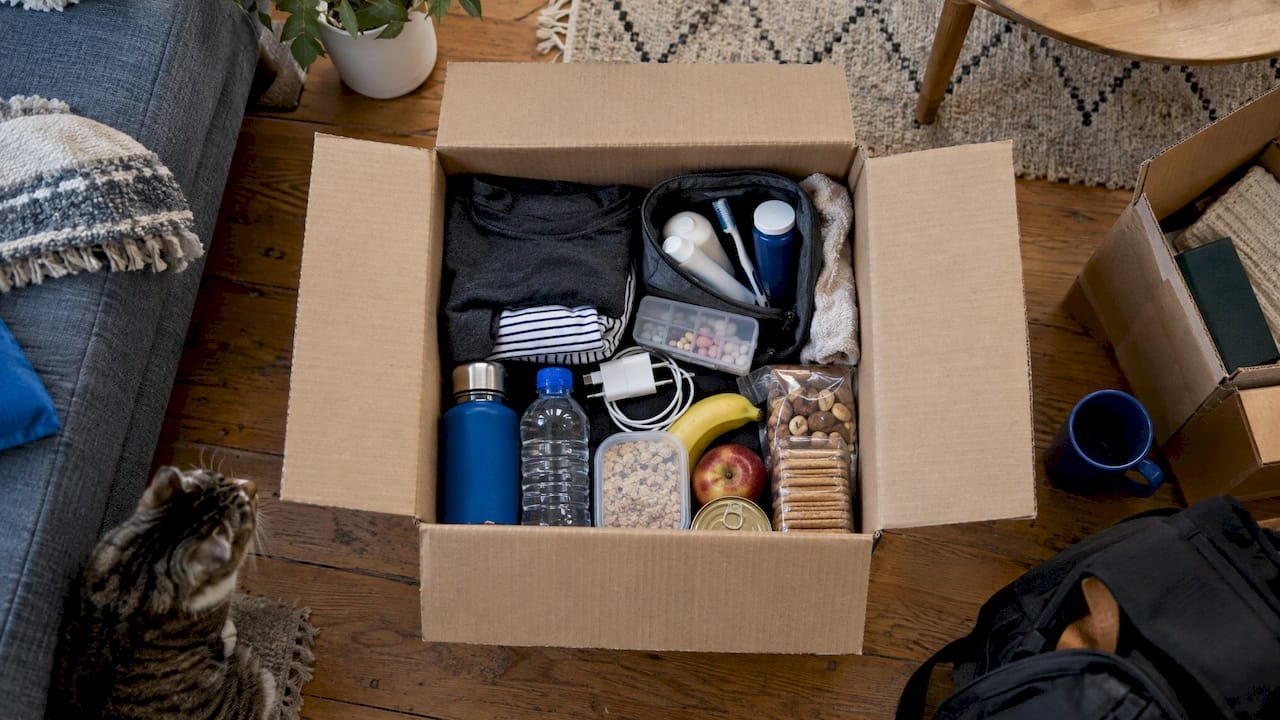
Put medication, chargers, toiletries, important documents, a change of clothes, drinks and simple food in one box you can find on day one. Labelling by room makes unloading faster, and our guide to labelling moving boxes shows the method. A short list of what to unpack first is in our unpacking order guide.
Protect the basics
The NHS-based steps-to-deal-with-stress leaflet says that if you know a difficult time like moving house is coming, plan ahead: arrange help, put off other responsibilities, look after sleep and food, and take at least 10 minutes of time for yourself each day. Mind suggests breaks and asking a friend or relative to take on daily tasks.
A few practical habits help:
- Keep two or three daily routines going through the move, and restart one on your first day in the new home.
- After a big packing day, protect the next morning for rest.
- Use a move-date window where you can, so one slipped deadline does not become a crisis.
- Talk with the people you are moving with before tense moments, not during them.
Hand over the jobs that drain you most
Benenden Health’s clinical team advise accepting offers of help and considering paying professionals for tasks that feel as if they will defeat you. In Sell House Fast’s survey, the biggest regret among movers was about professional and practical support (35%), ahead of not packing early enough (23%).
Packing and lifting are the two jobs that combine physical strain, decision fatigue and a hard deadline. That is where professional help changes the week most:
- Packing. Our packing service starts from £25 per hour. See what a packing service includes before you book.
- Moving day. Our house removals start from £65 per hour, with an insured, professional team and same-day availability.
- Small moves. For a flat, a room or a student move, see our man and van service, and our guide to man and van versus a full removal company.
- Fragile or valuable items. Our special moves start from £65 per hour and cover pianos and antiques.
Costs are a stress driver too, so hourly pricing helps: you can see what the job costs before moving day. Our guide to choosing a removal company lists what to check, and why a checklist saves money shows how planning keeps the hours down.
If you are moving a business, a flat or a shop
The same logic holds for other movers. Offices have staff, IT and downtime to protect: see our office relocation service, from £75 per hour, and the small business relocation checklist. Landlords and estate agents clearing an empty property can arrange furniture removal. Students and tenants with a few boxes rarely need more than a van and two people.
Perspective
Most of the stress we see described around moving comes from one thing: everything arriving at once. People try to pack, work, manage money and say goodbye to a home in the same fortnight.
Our view is simple. Plan early, and give the physical work to a professional team. We are fully insured, our pricing is transparent with no hidden fees, and we offer same-day availability, so a date that slips does not have to become a crisis.
When the packing and heavy lifting are handled, you get your evenings, your sleep and your meals back. That is what keeps a move calm.
West London removals
Plan your move with us
If you are moving in West London, we can take the packing, loading and transport off your hands. Tell us the size of the job and when you need us, and we will give you a clear quote.

Start with our house removals page, or see all services at West London Removal.
When to speak to your doctor
Moving can trigger what the NHS calls an adjustment disorder. Camden and Islington NHS Talking Therapies says a move to a different home, city or country is a recognised stressful change, with symptoms such as low mood, anxiety, insomnia, headaches, fatigue and social withdrawal. Anxiety Care UK says it appears within three months of the event and generally lasts no more than six months.
If anxiety, low mood or difficulty coping persist, talk to your GP or a counsellor. If you are at risk of losing your home or need housing advice, seek specialist support as early as possible.
FAQ
How can I make moving house less stressful?
Start eight weeks ahead, work backwards from moving day and pack in short sessions. Book help for packing and lifting early, and keep sleep, meals and a couple of routines going. An essentials box makes the first night easier.
Is it normal to feel anxious or tearful before a move?
Yes. Feeling tired, short-tempered or teary is common because routines are broken and nothing is where it should be. It usually eases once you settle. If it persists, see your GP.
When should I book removals?
Get quotes about eight weeks before and book around four weeks before, as the checklists above suggest. If your date changes at short notice, we offer same-day availability.
What can a removal company take off my plate?
The heaviest jobs: packing, loading, transport and unloading. We offer packing from £25 per hour and house removals from £65 per hour.
Sources
- Moving Home and Stress, Mental Health 360
- Moving house, Mentally United
- Moving house survey, The Independent
- Moving house ranked most stressful life event
- Moving House Stress, Sell House Fast
- 7 ways to reduce stress of moving home, Benenden Health
- Stress, Mind
- Moving home checklist, Independent Age
- Steps to deal with stress, NHS leaflet
- Adjusting to difficult life events, Camden and Islington NHS Talking Therapies
- Adjustment Disorder, Anxiety Care UK