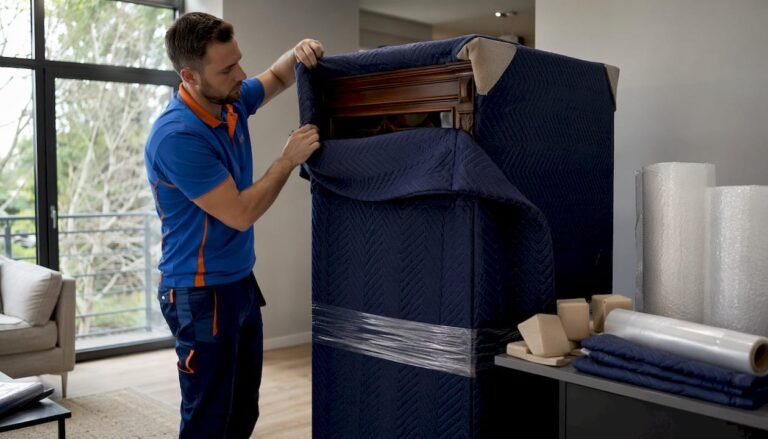
Professional movers do far more than carry boxes from one address to another. The role of a mover in a tenant move covers the safe handling, transport, and placement of all belongings within agreed service levels and timelines. At the most basic level, that means loading, transporting, and unloading items the tenant has already packed. At the full-service end, it extends to professional packing, furniture disassembly and reassembly, and unpacking at the new property. Understanding exactly where those boundaries sit prevents surprises on moving day and helps both tenants and landlords plan with confidence.
Here is a quick summary of what professional movers are responsible for:
- Physical transport: loading, driving, and unloading all agreed items
- Protective handling: wrapping, padding, and securing belongings to prevent damage
- Optional packing: professional packing and unpacking, only when explicitly booked
- Furniture disassembly and reassembly: included in full-service packages
- Documentation: preparing and managing the bill of lading, inventory lists, and contracts
- Communication: keeping tenants updated throughout the move and coordinating access logistics
- Scheduling: aligning timing with tenants, landlords, and building access requirements
In the UK, the British Association of Removers sets recognised standards for professional removal firms. Westlondonremoval operates in line with those standards, bringing over 1,000 satisfied clients and a strong track record of reliability to every tenant relocation across West London.
What does basic moving cover compared to full-service?
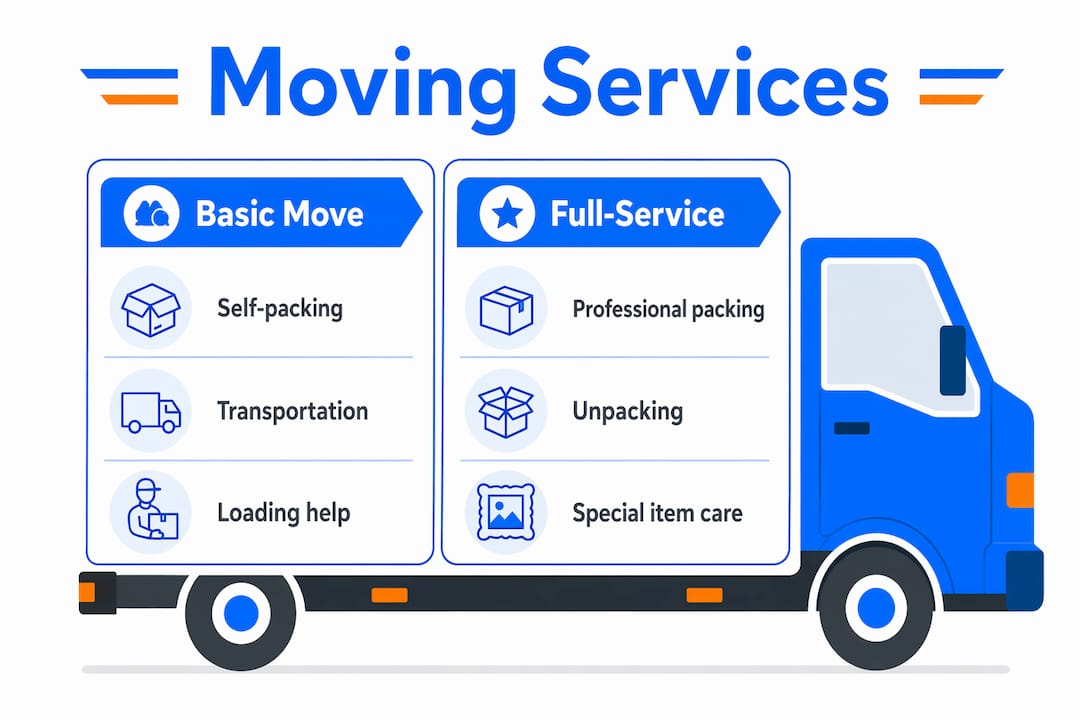
The distinction between basic and full-service moving is one tenants frequently misunderstand. Packing is a separate service that must be booked explicitly; it is not automatically included in a standard removal quote.
Basic moving includes:
- Collection of pre-packed boxes and furniture from the property
- Loading onto the removal vehicle in a safe, organised order
- Transport to the new address
- Unloading and placement in designated rooms
Full-service moving adds:
- Professional packing of all household items using appropriate materials
- Furniture disassembly before the move and reassembly at the destination
- Unpacking boxes and arranging items in the new property
- Disposal or removal of packing materials afterwards
The practical difference for tenants is time and effort. Basic moving requires you to pack everything yourself before the crew arrives, which can take days. Full-service moving hands that work to the movers entirely, which suits tenants with demanding schedules or large volumes of fragile items. The trade-off is cost: full-service packages carry a higher price, so it is worth comparing both options against your budget and timeline before booking.
Pro Tip: Book a full-service package if you have a lot of glassware, artwork, or electronics. Professional packers use the right materials and techniques to protect fragile items far better than most tenants can manage alone.
How movers protect your belongings during the move
Every action a professional mover takes is orchestrated for safety and efficiency. That is not a marketing claim; it is the operational standard that separates a reliable removal firm from an unreliable one.
Protective measures movers apply include:
- Wrapping furniture in padded blankets and stretch film before loading
- Using dollies, hand trucks, and ramps to move heavy items without dragging or dropping
- Padding door frames and stair banisters to protect the property itself
- Organising the loading order so heavy items sit at the base and fragile ones travel securely on top
- Maintaining a detailed inventory list throughout the process to track every item moved
Movers are also responsible for preventing damage to the property, not just the belongings inside it. Scuffed walls, broken banisters, and scratched floors are all avoidable with the right equipment and technique. A professional crew treats the building with the same care as the furniture.
There are limits, however. Movers cannot transport hazardous materials, perishable goods, or high-value personal documents. Tenants must clear these items themselves before moving day to avoid complications.

What administrative and communication duties do movers handle?
Movers carry a clear set of administrative responsibilities that go beyond the physical work. The crew leader or driver is responsible for preparing the bill of lading, which acts as the legally binding contract identifying ownership of goods on the vehicle. Tenants sign this document before the move begins and again upon delivery.
Key administrative tasks movers manage:
- Issuing and reviewing the bill of lading with the tenant before loading starts
- Completing and verifying the inventory list at both the collection and delivery addresses
- Collecting payment as agreed in the contract, typically before unloading
- Maintaining contact with the tenant throughout the day to confirm arrival times and delivery status
- Communicating any delays, access issues, or changes to the agreed schedule promptly
Movers act as the main point of contact during what is often a stressful day. Clear, calm communication from the crew makes a genuine difference to how smoothly the move runs. If you have special instructions, such as a specific room for certain boxes or a piece of furniture that needs extra care, tell the crew leader at the start of the day rather than mid-move.
How tenants and movers can work together effectively
A smooth move depends on both sides doing their part. Tenant cooperation allows movers to work at full efficiency, reducing time on site and the risk of errors.
Your responsibilities as a tenant on moving day:
- Have everything packed and labelled before the crew arrives (for basic moves)
- Identify priority items and communicate any fragile or high-value pieces clearly
- Be available to answer questions and make decisions quickly without hovering over the crew
- Confirm final placement preferences for furniture at the new address in advance
Movers need from you:
- Accurate information about access at both addresses, including parking restrictions, lift availability, and entry codes
- Advance notice of any oversized items, such as pianos or large wardrobes, that require specialist handling
- Clarity on items that are not being moved, to avoid confusion during loading
The best approach is to act as a coordinator rather than an overseer. Answer questions promptly, make decisions swiftly, and let the crew do the physical work. A moving checklist prepared in advance covers most of these points and keeps the day on track.
Pro Tip: Walk through both properties with the crew leader at the start and end of the move. This takes ten minutes and resolves most disputes about item placement or condition before they become problems.
How Westlondonremoval delivers reliable tenant relocations
Westlondonremoval has built its reputation on exactly the kind of clear, dependable service that tenant moves require. Trusted by numerous clients across West London, the team brings practical expertise to every relocation, whether that is a straightforward flat move or a complex multi-room property with access challenges.
Their approach covers both basic and full-service moves, with transparent pricing and same-day availability for tenants who need flexibility. Every move includes fully insured transport, professional handling, and a crew that communicates clearly throughout the day. For tenants with fragile or valuable items, Westlondonremoval’s specialist handling ensures those pieces arrive without damage.
Landlords working with Westlondonremoval benefit from the same reliability. Coordinating access, timing, and property protection is handled professionally, reducing the risk of disputes between tenants and landlords over moving-day damage. The team’s track record of high reliability ratings reflects a consistent standard of care that both tenants and landlords can depend on.
Over 1,000 satisfied clients have trusted Westlondonremoval with their West London tenant relocations, with consistently high ratings for reliability and efficiency across both basic and full-service moves.
For tenants and landlords in West London looking for a removal firm that takes its responsibilities seriously, Westlondonremoval is a trusted, fully insured choice. Get your quote today and move with confidence.

Key takeaways
Professional movers in a tenant relocation are responsible for safe transport, protective handling, clear documentation, and consistent communication throughout the entire move.
| Point | Details |
|---|---|
| Basic vs full-service | Basic covers loading, transport, and unloading; full-service adds packing, disassembly, and unpacking. |
| Protective handling | Movers use wrapping, padding, dollies, and ramps to protect both belongings and the property. |
| Documentation duties | Movers prepare and manage the bill of lading, inventory lists, and payment collection. |
| Tenant collaboration | Tenants should label items, confirm access details, and be available for decisions without micromanaging. |
| Liability limits | Movers cannot transport hazardous, perishable, or high-value personal documents; tenants must handle these. |