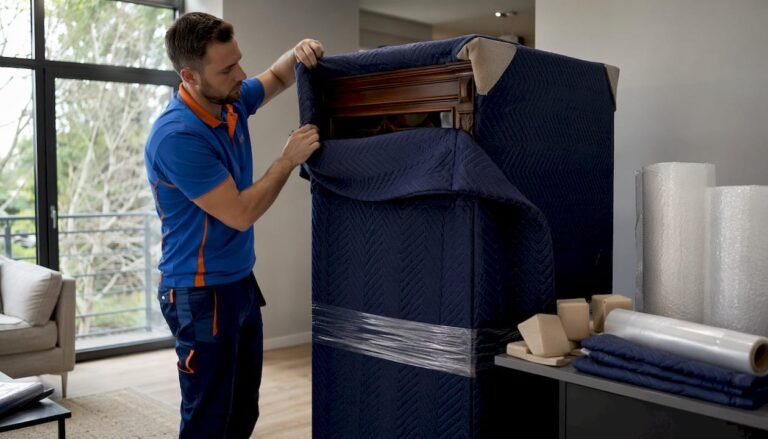
Furniture assembly delivery service types are defined by four primary tiers: curbside, threshold, room-of-choice, and white glove. Each tier differs in how much the provider does once the van arrives, and choosing the wrong one costs you time, money, or both. The industry recognises these four delivery service tiers as the standard framework for scoping any furniture order. Understanding which tier fits your furniture, your building, and your schedule is the single most useful decision you can make before placing an order.
1. What are the four main furniture assembly delivery service types?
The four tiers form a clear hierarchy from minimal to full service. Curbside delivery places items at the kerbside or the back of the lorry. Threshold delivery brings items to your front door or garage. Room-of-choice delivery places furniture in the specific room you request. White glove delivery covers unpacking, assembly, placement, and debris removal.
Prices reflect that hierarchy. White glove service typically ranges from £50 to £400 depending on furniture complexity and provider. Curbside sits at the lower end, while white glove commands the premium. The gap between tiers is not just about cost. It is about who carries the physical and logistical burden.
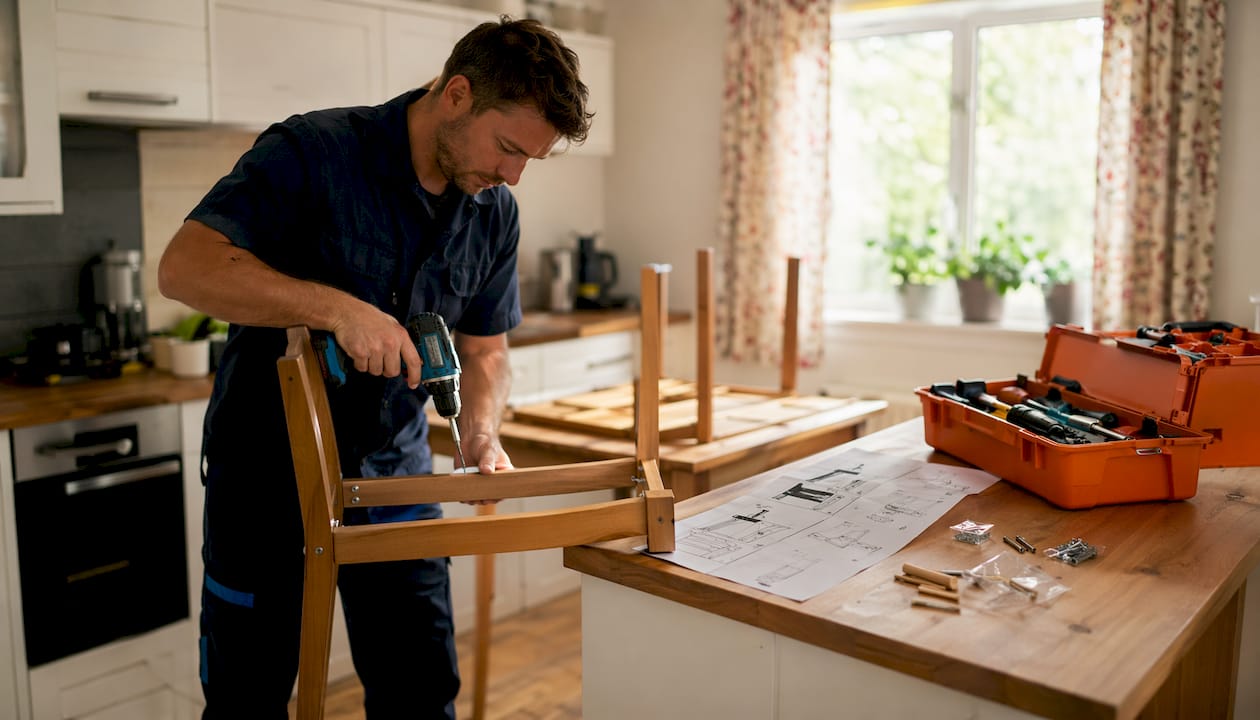
Here is a quick comparison of what each tier includes:
| Service tier | Delivery location | Unpacking | Assembly | Debris removal |
|---|---|---|---|---|
| Curbside | Kerbside or lorry | No | No | No |
| Threshold | Front door or garage | No | No | No |
| Room-of-choice | Specified room | Sometimes | No | No |
| White glove | Specified room | Yes | Yes | Yes |
Families buying a large dining set or a modular sofa will find that curbside delivery leaves them with a heavy box on the pavement and no further help. White glove removes that problem entirely. The right choice depends on what you are buying and how much help you genuinely need.
2. How do assembly service types vary by provider?
Assembly services split into two broad categories: retailer-bundled and independently booked. Retailers like IKEA, Wayfair, and Amazon bundle assembly at checkout but use third-party contractors to carry out the work. Independent assemblers, available through platforms like TaskRabbit, offer more scheduling flexibility and can handle furniture from multiple retailers in a single visit.
Retailer-bundled assembly is convenient because it is confirmed at the point of purchase. The downside is that you have less control over timing and the specific contractor assigned. Independent assemblers let you consolidate several items into one booking, which saves both time and money when you have bought from different shops.
The type of furniture also shapes which assembly option makes sense:
- Simple flat-pack items (small bookshelves, bedside tables): retailer-bundled or DIY both work well.
- Complex beds and wardrobes: professional assembly is strongly recommended due to the number of parts and fixings involved.
- Modular sofas and sectional units: independent assemblers with multi-retailer experience handle these most reliably.
- Powered or motorised furniture (electric recliners, adjustable beds): white glove teams perform functional testing of powered elements, which protects your warranty.
Pro Tip: When booking retailer-bundled assembly, always ask the retailer to confirm in writing exactly what the assembler will and will not do. Scope of work disputes are the most common complaint in this category.
3. When is DIY assembly the right choice?
DIY assembly suits flat-pack furniture that takes under 90 minutes and requires only basic tools. A simple bookcase or a coffee table with four legs falls into this category. Professional teams complete in 30–45 minutes tasks that would take an amateur several hours, because they carry specialised tools and have assembled the same models many times before.
The honest calculation is this: your time has a value. If assembling a wardrobe takes you three hours on a Saturday afternoon, and a professional charges £80 to do it in 40 minutes, the professional is often the better choice. That is before factoring in the risk of incorrect assembly, which can void a manufacturer’s warranty or create a safety hazard.
DIY works best when:
- The item has fewer than 30 components.
- The instructions are clear and the tools required are standard.
- You have assembled similar items before without difficulty.
- The furniture is lightweight enough to reposition if you make an error.
Professional assembly is the right call when the item is heavy, fragile, or structurally complex. Beds, large wardrobes, and multi-part modular units all fall into this group. Assembly costs for complex beds range from £150 to £400, while simpler bookcases typically cost £40 to £80. Those figures reflect genuine differences in time and skill required.
4. What factors influence your choice of delivery and assembly service?
Several practical factors determine which service tier is right for you. Getting these right before booking prevents delays, extra charges, and frustration on the day.
- Furniture size and weight. Large items like king-size beds or corner sofas cannot be safely moved by one person. Room-of-choice or white glove delivery is the only realistic option.
- Building access. Narrow hallways, tight stairwells, and low ceilings all affect what a delivery team can do. Measuring doorways and stairwells before booking prevents rejected deliveries and costly difficult-access fees.
- Assembly complexity. Count the number of components and check whether specialist tools are needed. More than 50 parts or any electrical element points firmly towards professional assembly.
- Your schedule. White glove services require a confirmed time window. If you need same-day or flexible booking, an independent assembler often offers more options.
- Cost and budget. Curbside is cheapest but transfers all labour to you. White glove costs more upfront but removes every post-delivery task.
- Liability and inspection. Professional delivery teams provide on-site inspection and functional testing, which protects you if damage or defects appear after delivery. This is particularly valuable for high-value purchases.
Pro Tip: Before any delivery, photograph your entry path including the front door width, hallway length, and any tight corners. Send these images to your provider in advance. This single step prevents the majority of difficult-access disputes.
5. Which service type fits your specific situation?
Matching the service tier to your actual situation saves money and avoids stress. Here are the most common scenarios and the best fit for each.
Buying a single flat-pack item online. Curbside or threshold delivery is sufficient. You collect the box, carry it in, and assemble it yourself or book an independent assembler separately.
Receiving a large sofa or dining table. Room-of-choice delivery is the minimum you should accept. These items are too heavy and awkward to move through a home without trained help. You can arrange furniture delivery for rental properties or family homes using this tier without paying for full white glove.
Moving house and receiving new furniture at the same time. Consolidate delivery and assembly into a single booking where possible. Booking a removal company that also handles furniture placement reduces the number of separate appointments and the risk of items being left in the wrong room.
Limited mobility or time constraints. White glove is the correct choice. The team handles every step from the lorry to the finished, assembled piece in the room you specify. The premium is worth it when physical effort or time is genuinely limited.
Premium or fragile items. White glove delivery includes unpacking, assembly, placement, and debris removal, plus inspection for damage. For a £2,000 dining table or a glass-fronted display cabinet, this protection is not a luxury.
A common and costly mistake is assuming that “full-service delivery” automatically includes assembly. Confirming the scope of work at the time of booking prevents the unpleasant surprise of a delivery team leaving unassembled boxes in your living room.
| Scenario | Recommended tier | Key reason |
|---|---|---|
| Small flat-pack, ground floor | Curbside or threshold | Low effort, no assembly complexity |
| Large sofa or bed | Room-of-choice | Weight and size require trained handling |
| Premium or fragile furniture | White glove | Inspection and assembly included |
| Limited mobility or time | White glove | Full service removes all physical effort |
| Multiple items, mixed retailers | Independent assembler | Flexibility and consolidation |
Key takeaways
The most effective approach to furniture assembly delivery is to match the service tier to your furniture’s complexity, your building’s access, and your available time before booking.
| Point | Details |
|---|---|
| Four tiers define the market | Curbside, threshold, room-of-choice, and white glove each offer a different scope of service. |
| Assembly type depends on complexity | DIY suits simple flat-pack; professional assembly is right for beds, wardrobes, and powered items. |
| Confirm scope of work in writing | Never assume assembly is included. Ask the provider to confirm exactly what they will do. |
| Measure access paths before booking | Doorways, stairwells, and hallways must be checked to avoid rejected deliveries and extra fees. |
| Liability protection has real value | Professional teams inspect on arrival and test powered elements, protecting your warranty. |
What we have learned from handling furniture deliveries across West London
The most common problem we see is not damage or delays. It is mismatched expectations. A customer books “full-service delivery” expecting a fully assembled wardrobe in their bedroom, and the team leaves flat-pack boxes in the hallway because assembly was not included in the tier they selected. That gap between expectation and reality is entirely preventable.
We have also noticed that families consistently underestimate access challenges. A three-seater sofa that fits through a standard front door in a new-build will not always fit through the Victorian terrace hallways common across West London. The furniture removal checklist approach we use for tenancy moves applies equally well to new furniture deliveries. Measure first, book second.
The other misconception worth addressing is that white glove is always expensive. For a single large item, the price difference between room-of-choice and white glove is often £50 to £100. When you factor in the time saved, the inspection included, and the debris removed, that premium is frequently the better value. The calculation changes when you are ordering multiple smaller items, where an independent assembler booked for a half-day is usually more cost-effective.
Our honest recommendation: always confirm the scope of work in writing, always measure your access path, and always consider whether the time you save is worth the price difference between tiers. For most families handling a significant furniture purchase, it is.
— West London removals
Westlondonremoval: furniture handling you can rely on
Westlondonremoval supports families and individuals across West London with reliable, fully insured moving and furniture handling services. Whether you need a single item placed carefully in a specific room or a full house move with furniture assembly coordination, our team is ready to help.

Our house removals service covers everything from careful furniture placement to full packing support, with transparent pricing and same-day availability across West London. Over 1,000 satisfied clients trust us because we confirm every detail in advance and deliver exactly what we promise. If you are planning a move or a significant furniture delivery, get in touch with Westlondonremoval for a clear, no-surprise quote.
FAQ
What are the four furniture delivery service types?
The four types are curbside, threshold, room-of-choice, and white glove. Each tier differs in how far the delivery team brings your furniture and how much they do once inside.
Does white glove delivery always include assembly?
White glove delivery typically includes unpacking, assembly, placement, and debris removal, but you should always confirm the scope of work in writing at the time of booking to avoid surprises.
How much does professional furniture assembly cost?
Assembly costs vary by item. Simple bookcases typically cost £40 to £80, while complex beds and large wardrobes range from £150 to £400 depending on the number of parts and time required.
When should I choose an independent assembler over retailer-bundled assembly?
Choose an independent assembler when you have furniture from multiple retailers, need flexible scheduling, or want to consolidate several items into a single booking for better value.
What is the most common furniture delivery mistake?
Failing to measure doorways, stairwells, and hallways before delivery is the most common mistake. It leads to rejected deliveries and difficult-access fees that are entirely avoidable with basic preparation.
Recommended
- Arrange furniture delivery for your rental property – West London Removal
- Furniture disposal options when moving house: 2026 guide – West London Removal
- Furniture removal between tenancies checklist: 2026 guide – West London Removal
- Arrange furniture removal from an empty property – West London Removal