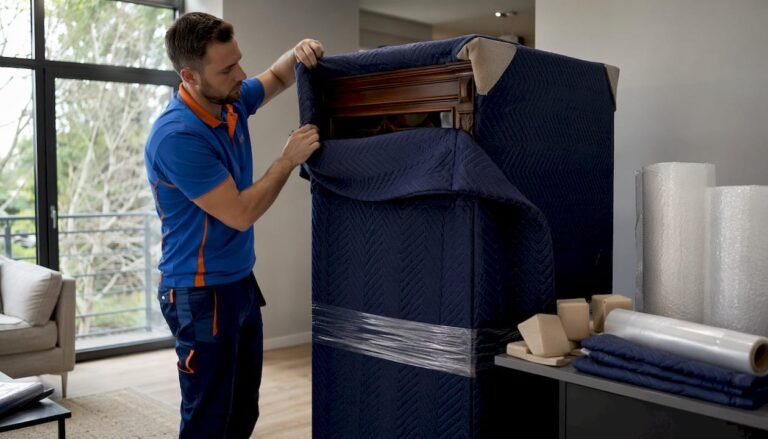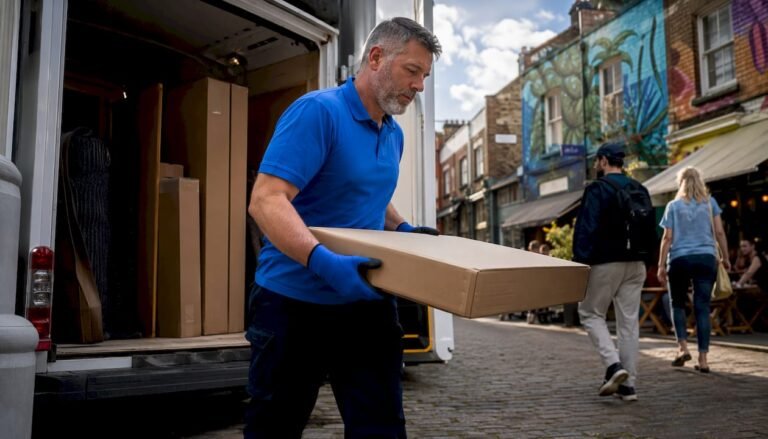
Moving boxes are specialised containers designed to protect, organise, and transport your belongings safely during a relocation. The role of moving boxes explained simply is this: without the right box, in the right size, packed correctly, your possessions are at serious risk. About 20% of boxes in typical residential moves contain at least one damaged item. More than half of those cases trace back to poor packing decisions, not accidents in transit. Choosing the correct box type and packing it properly is the single most effective thing you can do before moving day.
What types of moving boxes are there?
Moving boxes, known in the industry as removal cartons, come in several standard sizes and materials. Each type serves a specific purpose, and using the wrong one leads to damage, wasted space, or injury.
Standard sizes and what they carry
Small boxes (roughly 1.5 cubic feet) suit heavy items like books, tins, and tools. Medium boxes (3 cubic feet) work well for kitchen items, toys, and small appliances. Large boxes (4.5 cubic feet) are best for lightweight bulky items such as bedding, towels, and lampshades. Extra-large boxes serve a similar purpose for very bulky but light goods like duvets and cushions.
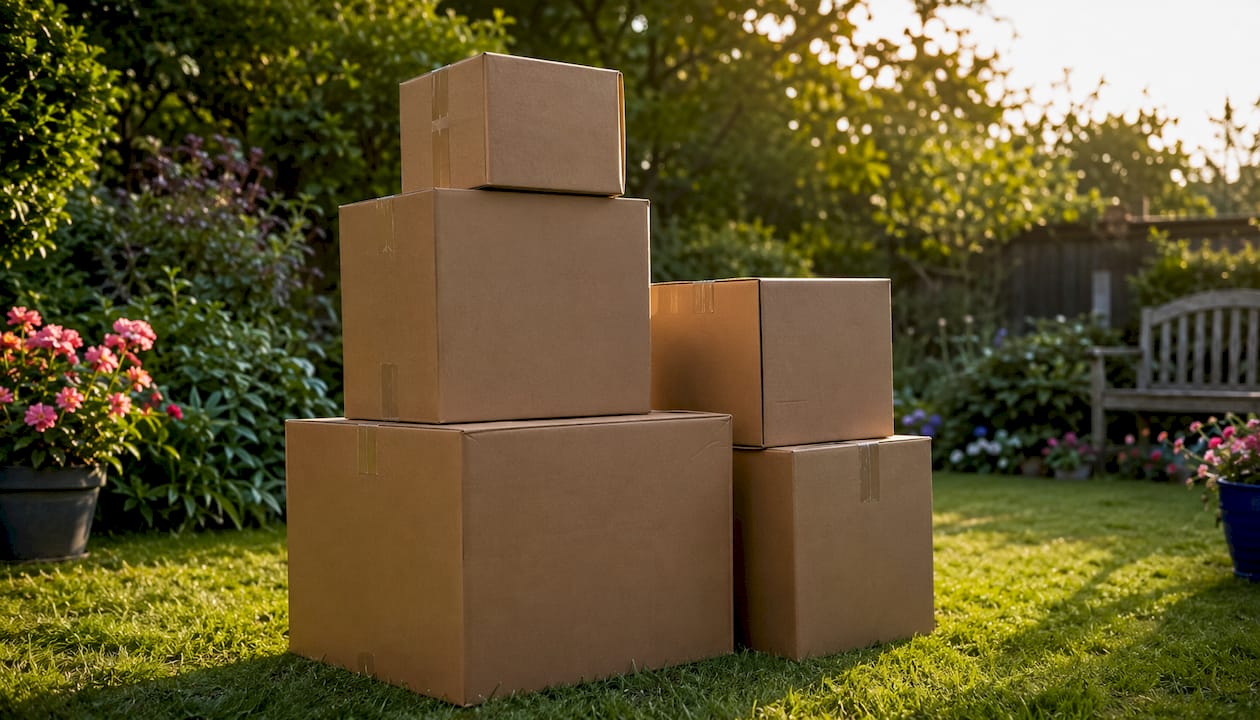
Large and extra-large boxes should only be used for lightweight bulky items. Packing dense or heavy items into them causes box failure and risks injury to anyone lifting them.
Specialty boxes
Beyond standard sizes, several specialist removal cartons exist for specific contents.
- Dish packs: Double-walled boxes with extra internal padding for crockery and glassware.
- Wardrobe boxes: Tall boxes with a hanging rail inside, keeping clothes wrinkle-free and on their hangers.
- Mirror and picture boxes: Flat, adjustable boxes that protect framed artwork and mirrors.
- File boxes: Narrow, sturdy boxes designed to hold hanging files upright for office moves.
Cardboard versus reusable plastic boxes
| Feature | Cardboard boxes | Reusable plastic boxes |
|---|---|---|
| Cost | Low upfront | Higher upfront or rental fee |
| Assembly | Requires folding and taping | Ready to use immediately |
| Water resistance | Poor | Excellent |
| Stackability | Moderate | High, with uniform sizing |
| Environmental impact | Single use, recyclable | Reusable over many moves |
| Best for | Long-distance or one-off moves | Local moves, tight schedules |
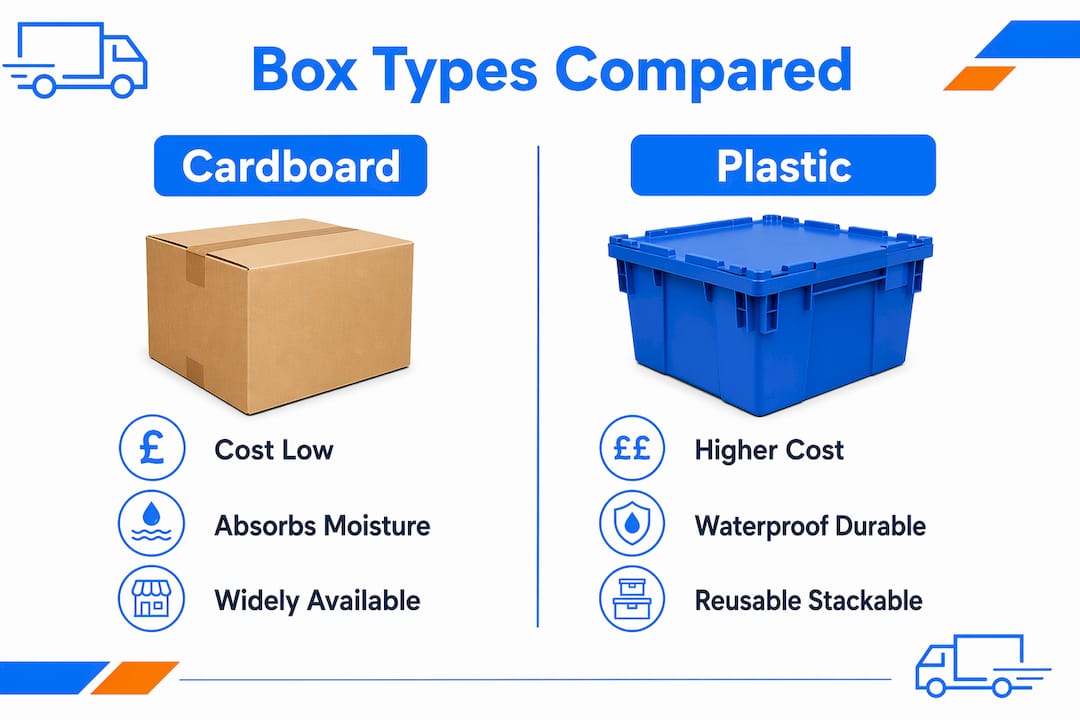
Cardboard remains the most widely available option and suits long-distance or infrequent moves well. Reusable plastic boxes suit local moves where speed and organisation matter most.
How do you pack moving boxes correctly?
Correct packing technique protects your belongings and makes unpacking far easier. The method matters as much as the box itself.
The right cushioning and weight
Each packed box needs at least 3 inches of cushioning material on all sides. This means lining the base, filling gaps around items, and topping off with padding before closing the lid. Bubble wrap, packing paper, and foam sheets all work well. A box should ideally weigh less than 50 pounds to protect both the box and the person carrying it.
Step-by-step packing method
- Choose the right size box for the contents. Heavy items go in small boxes; light bulky items go in large ones.
- Tape the base with three strips of heavy-duty tape. One strip runs down the centre seam, and one strip reinforces each outer edge. Three strips of tape on the bottom seam significantly improves load-bearing capacity.
- Line the base with at least 3 inches of packing paper or bubble wrap.
- Pack heaviest items first, placing them flat at the bottom of the box.
- Fill gaps around and between items with crumpled packing paper or foam. Never leave empty space.
- Avoid mixing heavy and fragile items. Mixing books and fragile ornaments in one box causes damage. Keep item types consistent within each box.
- Perform the silent shake test. Professional packers rock the box gently after sealing it. If you hear or feel shifting, open it and add more filler material.
- Label every box clearly with the destination room and a brief note of contents. Write on at least two sides so the label is visible when boxes are stacked.
Pro Tip: Label boxes on the side, not just the top. When boxes are stacked in a removal van, side labels are the only ones you can read without moving everything.
A well-packed box should feel solid when you press the top. It should not bulge, flex, or rattle. If it does any of these things, repack it before moving day.
Cardboard or plastic: which moving box is better?
The choice between cardboard and reusable plastic boxes depends on your move type, budget, and timeline. Both have genuine advantages.
Why cardboard boxes still make sense
Cardboard removal cartons are affordable, widely available, and easy to source for free from supermarkets or online. They fold flat for storage and are recyclable after use. For long-distance moves or moves where you need a large quantity quickly, cardboard is the practical choice.
The downsides are real, though. Cardboard absorbs moisture, weakens when wet, and can collapse if stacked unevenly. Disposal after the move adds time and effort, particularly if you have dozens of boxes to break down and recycle.
Why plastic boxes are worth considering
Reusable plastic moving boxes speed up packing by eliminating assembly and tape application entirely. They are waterproof, stackable, and far sturdier than cardboard under load. For local moves or office relocations, the time saved on setup and post-move disposal is considerable.
Stacking uniform plastic boxes improves loading efficiency and reduces the risk of collapse during transport. This matters particularly in a removal van where boxes shift during cornering.
Pro Tip: If you are moving locally and have a tight schedule, renting plastic boxes for a week costs less than you might expect and removes the hassle of sourcing and disposing of cardboard entirely.
The environmental case for plastic boxes is straightforward on local moves. One set of reusable boxes replaces dozens of single-use cardboard cartons. For anyone moving without professional help, a practical moving guide can help you decide which box type suits your specific situation.
How many moving boxes do you actually need?
Underestimating box quantities is one of the most common moving mistakes. Running out of boxes on moving day adds stress and delays.
A standard two-bedroom apartment requires 40–60 moving boxes in total. That figure includes specialty boxes for kitchens and wardrobes. The breakdown by room typically looks like this:
| Room | Standard boxes | Specialty boxes |
|---|---|---|
| Kitchen | 6–12 | 1–2 dish packs |
| Bedroom (per room) | 8–12 | 1 wardrobe box |
| Living room | 6–10 | 1 mirror/picture box |
| Bathroom | 3–5 | None typically |
| Home office | 4–6 | 1–2 file boxes |
These figures assume a reasonably furnished home. A minimally furnished flat needs fewer boxes; a heavily furnished or cluttered home needs more.
A few practical points help you refine your estimate:
- Dense items like books fill small boxes quickly. Budget more small boxes than you think you need.
- Kitchens are almost always the most box-intensive room in any home.
- Closets and storage areas are easy to underestimate. Walk through them before ordering boxes.
- Order 10% more boxes than your estimate. Returning unused boxes is far easier than making an emergency trip mid-pack.
A moving checklist helps you track box quantities room by room and avoid costly last-minute purchases.
Key takeaways
Moving boxes protect your belongings, reduce damage, and make unpacking faster when you choose the right type, size, and packing method for each item.
| Point | Details |
|---|---|
| Damage risk is real | Around 1 in 5 boxes in residential moves contain a damaged item, mostly from poor packing. |
| Match box size to contents | Heavy items go in small boxes; large boxes are only for lightweight bulky goods. |
| Tape and cushion correctly | Use three strips of tape on the base and at least 3 inches of padding on all sides. |
| Estimate quantities carefully | A two-bedroom apartment typically needs 40–60 boxes, including specialty cartons. |
| Plastic boxes suit local moves | Reusable plastic boxes save setup time, improve stacking, and remove disposal hassle. |
What we have learned from hundreds of moves
After working with over 1,000 clients across West London, we have seen the same mistakes repeated on move after move. The most common is using large boxes for heavy items. People assume a bigger box means more efficiency. What it actually means is a box that splits at the base, a back injury for whoever lifts it, and broken contents on the floor of the removal van.
The second most overlooked factor is labelling. Most people write the room name on the top of the box. When that box is at the bottom of a stack in the van, the label is invisible. Writing on the sides takes ten extra seconds and saves ten minutes of unpacking confusion.
We also see a lot of underfilled boxes. A box that is half-full collapses under the weight of boxes stacked on top of it. Fill every box to the top, even if that means adding scrunched packing paper to fill the space. A firm, full box protects itself and everything beneath it.
The honest truth is that most moving damage is preventable. It comes down to three things: the right box for the right item, correct packing technique, and clear labelling. Get those three right and your move becomes significantly less stressful, regardless of whether you are moving a studio flat or a four-bedroom house.
For anyone considering reusable plastic boxes, we genuinely recommend them for local moves. The time saved on assembly and disposal alone makes them worth the rental cost.
— West London removals
How Westlondonremoval handles your boxes and packing
Choosing the right boxes and packing them correctly takes time and knowledge. Westlondonremoval brings both to every job.
Our team selects the appropriate box type and size for each category of item, from dish packs for your kitchen to wardrobe boxes for your clothes. We use industry-standard packing materials throughout, including bubble wrap, packing paper, and heavy-duty tape applied correctly to every base seam. Every box is labelled clearly before it goes into the van. If you are planning a house removal in West London or need help with a Chiswick removal, get in touch for a transparent, no-obligation quote. We have same-day availability and over 1,000 satisfied clients across the area.
FAQ
What is the role of moving boxes in a relocation?
Moving boxes protect belongings from damage, keep items organised by room, and make loading and unloading a removal van far more efficient. Without them, loose items shift, break, and take significantly longer to handle.
How many boxes do I need for a two-bedroom flat?
A two-bedroom apartment typically requires 40–60 moving boxes, including standard cartons and specialty boxes such as dish packs and wardrobe boxes.
What is the safest way to tape a moving box?
Apply three strips of heavy-duty tape to the base seam: one strip along the centre and one strip reinforcing each outer edge. This method significantly improves the box’s load-bearing strength.
Should I use cardboard or plastic moving boxes?
Cardboard suits long-distance or one-off moves where cost and availability matter most. Reusable plastic boxes are better for local moves, offering faster setup, better stacking, and no disposal hassle after the move.
How do I know if a box is packed correctly?
Perform the silent shake test: gently rock the sealed box. If you hear or feel contents shifting, open the box and add more cushioning material until everything is firmly held in place.
Recommended
- How to move without professional removers: a practical guide – West London Removal
- Why a moving checklist saves money on your move – West London Removal
- Why businesses need specialist movers for office relocations – West London Removal
- The role of removal in an office move: 2026 guide – West London Removal