Most hidden moving costs are not hidden by the removal firm. They sit around the move: cleaning, decorating, storage, new curtains, tradespeople, utility overlaps and the small extras of moving day. The ones that do sit inside a removal quote are easy to remove with a written, itemised price and an hourly rate you can check. At West London Removal we publish our rates (from £65 per hour for house removals) and work with insured, professional crews, so the removal part of your budget holds. This guide shows where the rest of the money goes and how to plan for it.
TL;DR
- One in five recent UK movers met unexpected costs, most often decorating, new furniture and appliances, curtains and blinds, and tradespeople.
- The average move in England costs £17,413 in total, and removals are one of the smaller lines at £624.
- A good removal quote lists what is included, what is excluded and when extra charges can apply. Ask for it in writing.
- Add a buffer for storage, mail redirection, overlapping bills and moving-day extras such as childcare, pet care and food.
- Tenants, students, landlords and businesses each have their own extras. They are covered below.
Table of Contents
- What counts as a hidden moving cost
- What a move actually costs: the figures
- Extras inside or around the removal quote
- Storage, redirection and other costs on either side of the move
- Moving-day costs people forget
- Extra costs for tenants and students
- Landlords, estate agents and shops
- Office moves: where the budget slips
- How to check a quote before you book
- Our view: fix the part you can fix
- Get a clear price for your move
- FAQ
- Sources
What counts as a hidden moving cost
A hidden cost is any expense you did not put in your budget, either because you did not know about it or because it only appears once the move is under way. Some are fees on the purchase. Some belong to the move itself. Others turn up after you open the front door.
The best UK evidence comes from a Which? survey of 647 people who had moved in the past three years, carried out by Deltapoll in August 2025. One in five had faced unexpected costs. The five biggest surprises were:
- decorating (8%)
- new furniture and appliances (8%)
- curtains and blinds (7%)
- tradespeople (7%)
- stamp duty (6%)
Professional cleaning, storage, estate agent fees and mortgage fees also featured. Notice what is not on the list: the removal van. The costs that catch people out are mostly the ones nobody thought to price.
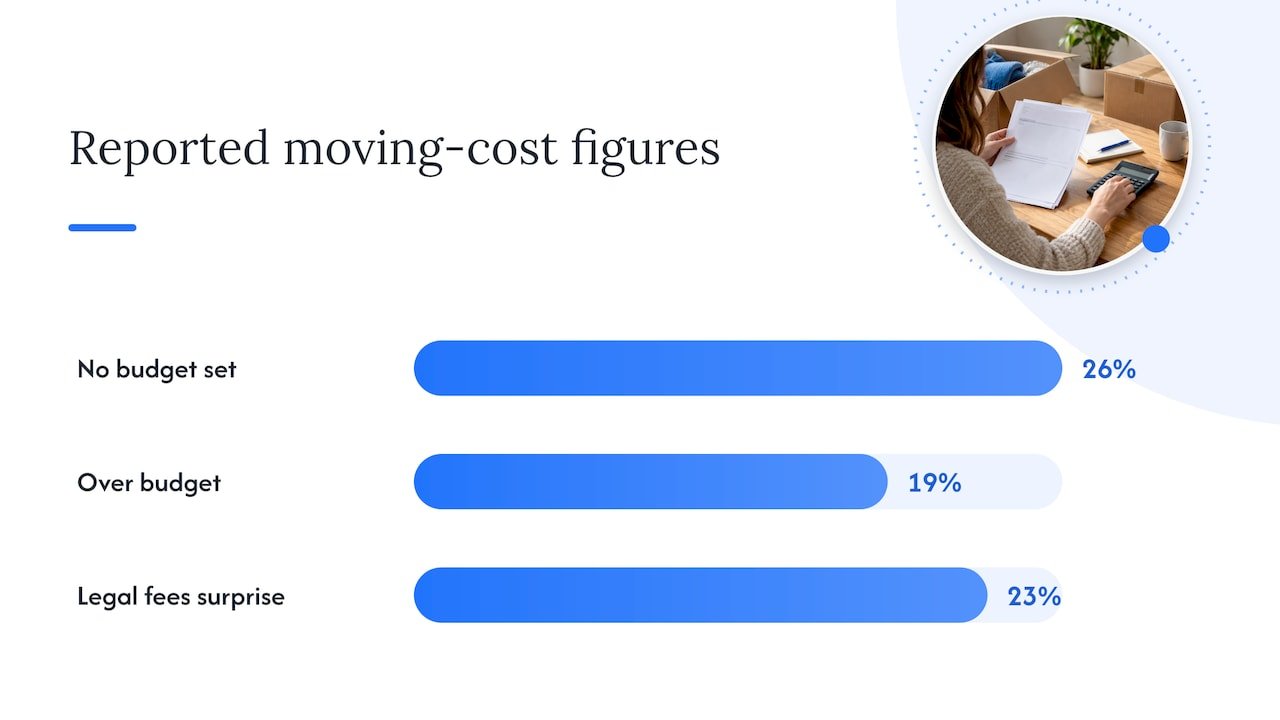
Planning is the other half of the problem. A 2026 report from JMW Solicitors, based on a commissioned survey of 500 recent home movers, found that 26% had not set a budget and a further 19% went over the one they had. Legal fees were the cost that surprised the largest share of people (23%). That survey was commissioned by a law firm, so treat it as a guide to what people report rather than a national statistic.
What a move actually costs: the figures
Which? published its 2026 estimate in October, using Reallymoving data built on 2026 median purchase prices. It puts the average cost of moving home in England, selling and buying, at £17,413. The breakdown is below.
| Cost | Average (England, 2026) |
|---|---|
| Stamp duty | £9,500 |
| Estate agent | £4,473 |
| Conveyancing (legal work) | £2,241 |
| Survey | £510 |
| Removals | £624 |
| Energy performance certificate (EPC) | £65 |
The same source says the average cost of moving 30 miles fell 12% to £624. These are averages for buyers and sellers, so a tenant or a flat-share move will sit far lower. The point stands for everyone: the removal firm is a small part of the total, and it is the part you control most easily.
For removals alone, MoneyHelper says average home removal costs start from £400 and can pass £1,000. Price depends on the size of the home, the distance, the number of movers and the hours the job takes. Our guide to removal hourly rates in the UK explains how hours are worked out.
Extras inside or around the removal quote
This is where a quote can differ from your final bill. The British Association of Removers (BAR) is the trade body for removal firms. Its Code of Practice 2023 says members must avoid hidden extras and give free, fixed-price written quotations with a clear specification of the service. It also says members must point out services not normally provided. The code names several, and each is worth asking about:
- disconnecting and reconnecting appliances such as washing machines
- rehanging curtains
- clearing cellars, lofts and attics
- dismantling or building furniture
If your quote does not say who does these jobs, ask. A wardrobe that has to come apart, or a loft full of boxes you forgot, can add hours on the day.
Packing materials and packing time
Boxes, tape and bubble wrap are a classic surprise. JMW lists packaging materials among the easy-to-miss costs. Packing is also time. If you plan to pack yourself and run out of hours before moving day, the work comes back to you at the busiest moment. Our packing service is priced from £25 per hour, so you can set the cost of packing against the hours you would spend doing it. For a fragile load, see our guide to packing fragile items.

Insurance for your belongings in transit
JMW also flags insurance gaps for belongings in transit. Check what the removal firm’s cover includes and whether your home contents policy covers items while they are moving. Our article on moving insurance costs shows what to budget. Our removal crews are insured and professional, which is the first thing to confirm with any firm you book.
Items you did not plan to take
Old mattresses, broken furniture and garden waste are the things people decide not to move at the last minute. Leaving them behind can breach a tenancy or delay a sale. We offer debris disposal and yard clearance, and our guides to furniture disposal options and mattress disposal in London help you plan it before the van arrives.
Storage, redirection and other costs on either side of the move
Moves rarely line up perfectly. A completion date slips, a tenancy ends a week early, or a room is not ready for furniture. Storage fills the gap. MoneyHelper gives about £22 per week for a 50 square foot self-storage unit as a guide, and notes that cheaper units may lack 24-hour access or CCTV. London prices differ from the national picture, so see our storage costs in London guide and our practical guide to storage for West London movers.

Mail redirection is small but easy to forget. MoneyHelper quotes Post Office and Royal Mail prices from £36 for up to 12 months. Our change of address checklist lists who else to tell.
JMW’s list adds several more to your budget:
- gas, electricity and internet paid at both properties for a while
- broadband connection and TV licence set-up
- food spending while the kitchen is packed
- an EPC, which it says can cost more than £100 depending on the local assessor
Moving-day costs people forget
MoneyHelper advises budgeting for the small extras of the day itself: childcare, pet care and takeaways for a day or two. None is large. Together they can add a few hundred pounds to a family move.
Timing affects price too. Which? notes that the end of the summer holidays is the busiest and most expensive moving period, and Fridays are the busiest day of the week. If your dates are flexible, a mid-week move outside peak weeks is the simplest saving. The same article says some firms offer removal discounts to groups such as pensioners, students, key workers and armed forces members, so ask when you request a quote.
Our prepare for moving day checklist covers the jobs to finish beforehand, and why a moving checklist saves money explains how small oversights turn into paid extras.
Extra costs for tenants and students
If you rent, your hidden costs differ from a buyer’s. The Tenant Fees Act 2019 in England limits what a landlord or agent can charge. According to the London Trading Standards guidance, permitted payments include rent, a capped holding deposit and security deposit, utility bills and council tax, reasonable default fees, and early-termination charges. A change to the tenancy at your request can cost £50 or reasonable costs. Administration, referencing, inventory and check-out fees, and default professional-cleaning fees, can no longer be charged.
So what should a tenant still budget for?
- the deposit and first month’s rent
- bills at two addresses during the overlap
- the move itself
- boxes and packing materials
- cleaning the old place to a good standard so the deposit comes back in full
Students moving between halls and shared houses often need only a small load moved. A man and van job usually fits that, and our man and van service is built for it. Our guide on man and van versus a full removal company shows which suits the size of your move. If a discount for students applies, ask for it when you book.
Landlords, estate agents and shops
Between tenancies, the hidden cost is time. A void week costs rent, and left-behind furniture has to be cleared before the next tenant arrives. Our furniture removal between tenancies checklist and guide to arranging furniture removal from an empty property set out the steps. We also offer same-day availability, which helps when a handover date moves at short notice.
Shops delivering furniture and appliances face a different pattern: many short jobs rather than one big one. A man and van booking charged by the hour makes each delivery easy to cost.
Office moves: where the budget slips
Office relocations carry costs a home move does not: IT disconnection and reconnection, downtime while staff cannot work, new signage and stationery, and lease obligations on the old premises. Our office relocation rate starts from £75 per hour. For the full budget, read office relocation costs in London, and use the small business relocation checklist to plan the order of work. Planning the move around a weekend keeps downtime short.
How to check a quote before you book
- Ask for it in writing. BAR members must give a free, fixed-price written quotation with a clear service specification. Whoever you book, expect the same standard.
- Read the inclusions and exclusions. Look for the jobs listed earlier: appliances, curtains, lofts and cellars, furniture dismantling.
- Ask when extra charges can apply. The BAR code requires members to identify those circumstances. Common ones are poor parking, long carries and a larger load than described.
- Find out how deposits are protected. The code says members must explain how pre-payments are protected and refunded.
- Confirm insurance cover for your goods in transit.
- Check the hourly rate and the minimum time. Our guide on choosing a removal company covers the questions to ask.
Then build your own budget. Which? suggests comparing estate agents, cleaners, storage, removal firms, surveyors and solicitors to lower fees, and keeping a pot of money aside for repairs after you move in. Its example was a couple whose repair quotes ranged from £4,000 to £25,000. A simple rule is to add a buffer to your total and to list every line in a spreadsheet before you book anything.
On a buying move, a solicitor can help avoid costs that appear later. JMW argues that searches and contract review can reveal service charges, drainage charges or flood risk before you commit.
Our view: fix the part you can fix
Most of what makes a move expensive is outside our control: stamp duty, legal fees, decorating. The removal day is the part we can make predictable.
That is why we publish our hourly rates: from £65 for house removals, from £75 for office relocations, from £65 for special moves such as pianos and antiques, and from £25 for packing. You know the rate before you call. Our promise is transparent pricing and no hidden fees, delivered by an experienced, fully insured team.
We also think the best way to protect your budget is to remove surprises on the day. Pack early or let us pack for you, tell us about the loft, the awkward wardrobe and the parking, and we will plan the hours around them. Same-day availability means a change of date does not have to become a crisis.
West London removals
Get a clear price for your move
If you are moving in West London, our house removals service starts from £65 per hour, with insured, professional crews and same-day availability. Tell us about the size of the home, the access at both ends and any large or delicate items, and we will price the job with you. We also cover Kensington and Chelsea and Hammersmith and Fulham.

Man and van, packing, special moves and debris disposal are available too. Start from our website and get your quote.
FAQ
What are the most common hidden costs of moving house?
In the Which? survey, the biggest surprises were decorating, new furniture and appliances, curtains and blinds, tradespeople and stamp duty. Cleaning, storage, mail redirection and bills at two addresses also catch people out. Listing every one of these before you book is the easiest protection.
How much does it cost to move home in the UK?
Which? puts the average cost of moving home in England at £17,413 in 2026, including stamp duty, agent and legal fees. Removals averaged £624 within that total. Your own figure depends on whether you buy, sell or rent, and how big the home is.
Is a removal quote fixed?
It should be written, itemised and clear about what is included. BAR members must provide fixed-price written quotations and identify when extra charges could arise. For hourly work, the rate and the expected hours should both be on the quote.
Should I budget for storage?
Yes, if your dates might not line up. MoneyHelper gives about £22 per week for a 50 square foot unit as a guide. London prices vary, so check our storage costs guide for West London.
Sources
- The most unexpected moving costs, Which?
- How much does it cost to move home in 2026? Which?
- Estimate your overall buying and moving costs, MoneyHelper
- The True Cost of Moving House in the UK: 2026 Report, JMW Solicitors
- British Association of Removers Code of Practice 2023
- Student tenancies booklet, London Trading Standards